One of the biggest tests of my practice has to do with my mind in a crowded space. What happens when I’m confronted with the incessant bombardment of noise, people, movement, and lights? In Tokyo this past March I walked into this environment wondering how my tortured mind would handle the impact of the mass of humanity in this huge city.
Once you arrive at Haneda airport, the walkway into Customs is almost silent….after the blast of jet engines for twelve hours or so, the silence is welcome. THat silence, of course, is fleeting as everyone gathers in a hall that processes your entry papers. I chose to use the Japan web online form for entry and it was flawless. A picture of my face, a QR code, passport, and then finger prints sent me into the country. Once out of the customs area, crowds press on all sides as many exhausted people try to find their way into the city.
On this trip, I knew what I was doing and had preloaded my SUICA card with credits for subway travel. I hopped on the Keikyu line and headed directly to Asakusa. The crush of people on the train meant that I stood for about 30 minutes until my stop came around. The noise of the train, the movement of the car on the tracks, and the shoulders touching almost constantly with the sway of the train were distracting and my mind was both foggy from lack of sleep and my mind trying to adjust to the sound of Japanese over the loudspeakers alerting travelers of the next stop.
As I slowly adjusted to the situation, my mind relaxed. I could focus on my breath and could pick out sounds that were masked before my awareness expanding. The heavy breathing of a passenger sitting near me, a child whispering to their mother, the shuffle of feet on the floor….all of it came into my awareness. Then, my mind settled and I was quiet.
The above description is representative of what I experienced in those first few minutes of being in Japan, a densely populated country. On this trip, I encountered thousands of people during my walks around the city, and found moments of reflection and solitude in a place filled with people.
In some of those moments, I sought out places that would contribute to or enhance my experience. In the caves of Hasadera Temple and Shrine, I met my quiet mind in the dark, chilly spaces above Kamakura.

In the main shrine room of the temple complex is a massive gilded wooden statue to Kannon, the Bodhisattva of Compassion. In the form depicted at Hasedera, Kannon has a feminine or androgynous look which aligns with the broader interpretations of Avalokitsvara in China and Japan as a female figure. Inside the shrine room, the light is dim and the ceiling rises above you as Kannon stands tall in a temple that originates from the 8th century C.E.
After the caves, I walked into the shrine room, past the souvenir kiosks. When I visited the room was silent and I fell into a deep meditative state. This change happens sometimes when I am in a sacred space and it certainly happened here. The quiet and lack of noise definitely contribute to the sense of spaciousness that I think is necessary for me to be meditative. It was a wonderful moment as I stayed for about 1/2 an hour.
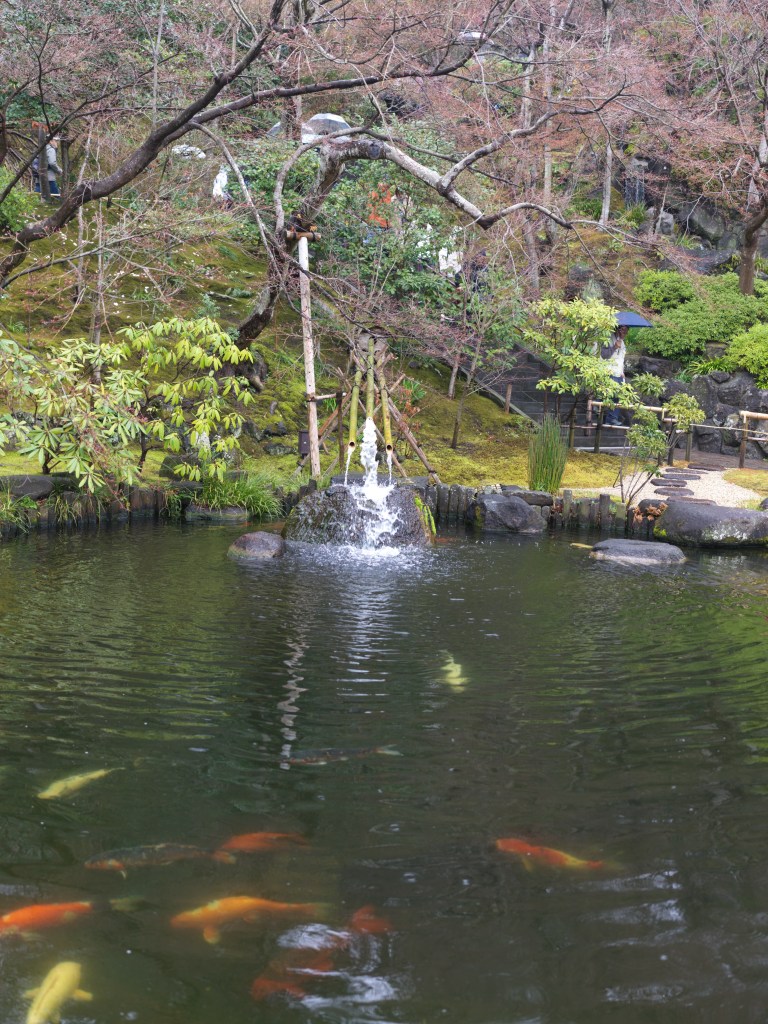
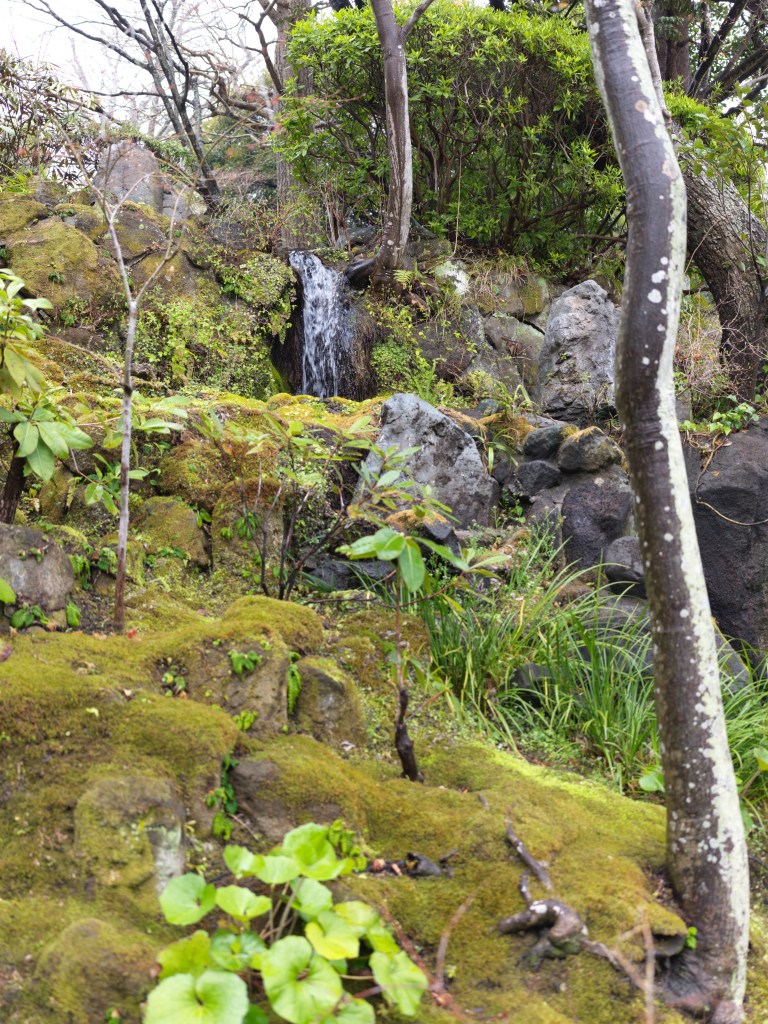
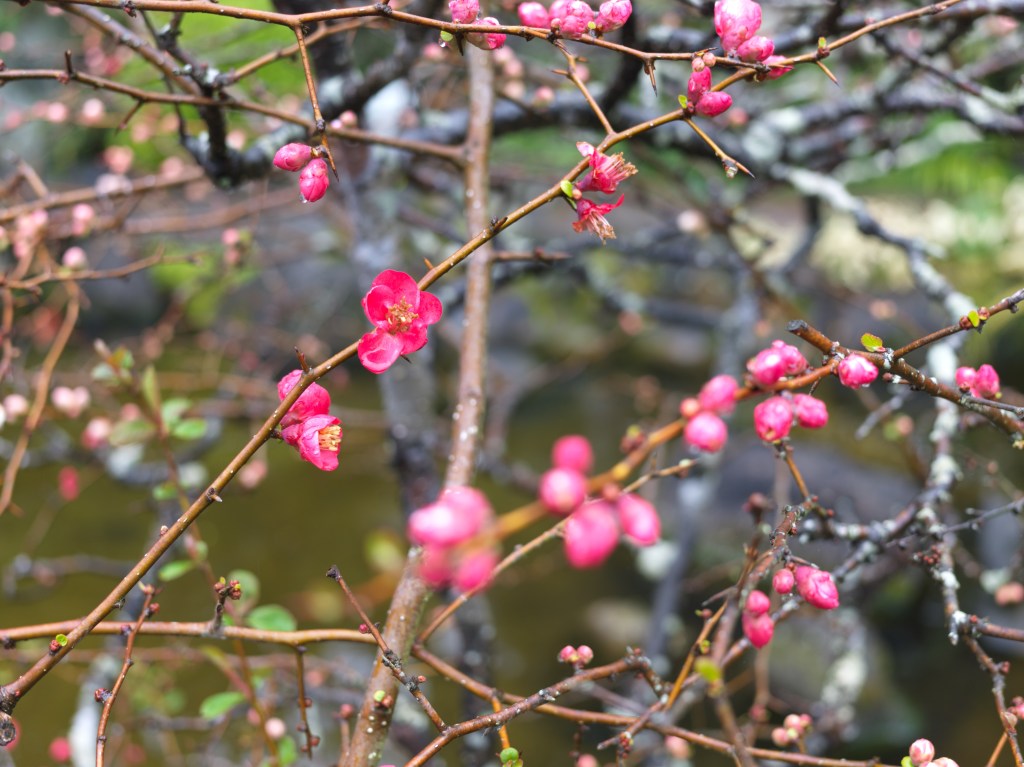
The grounds around Hasedera on this wet, cold day, were still spectacular. The koi pond, waterfall, and gardens are remarkable and the weather kept the crowds away on this day.
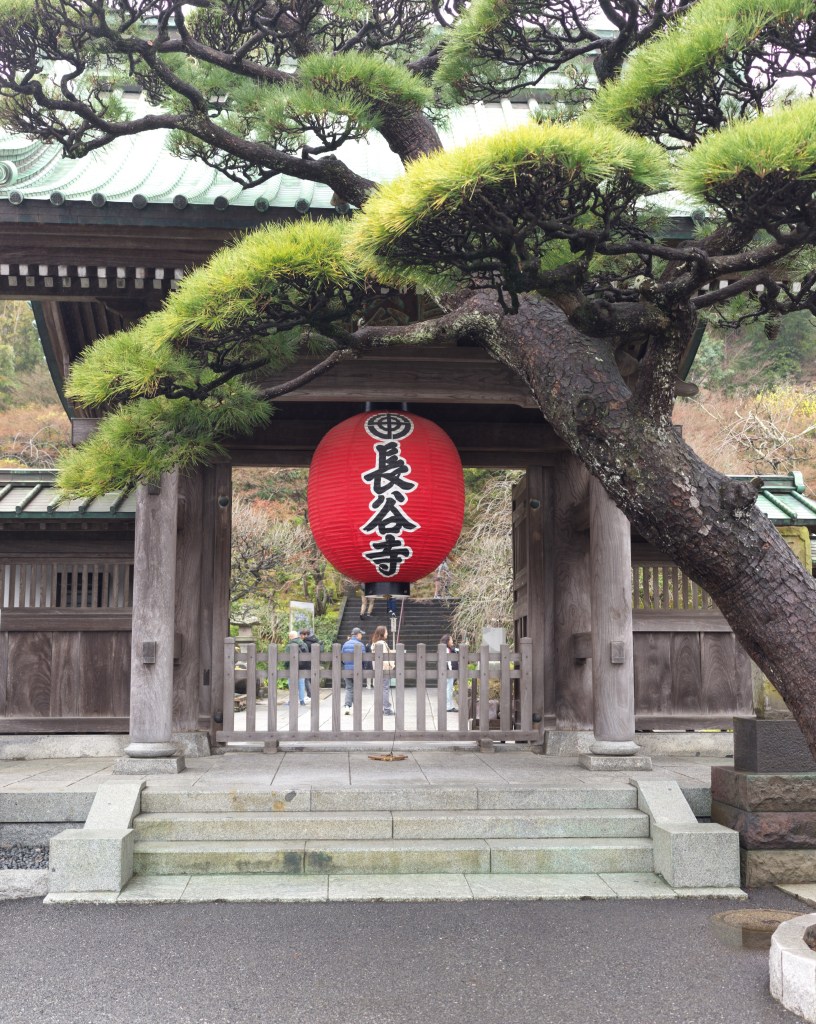
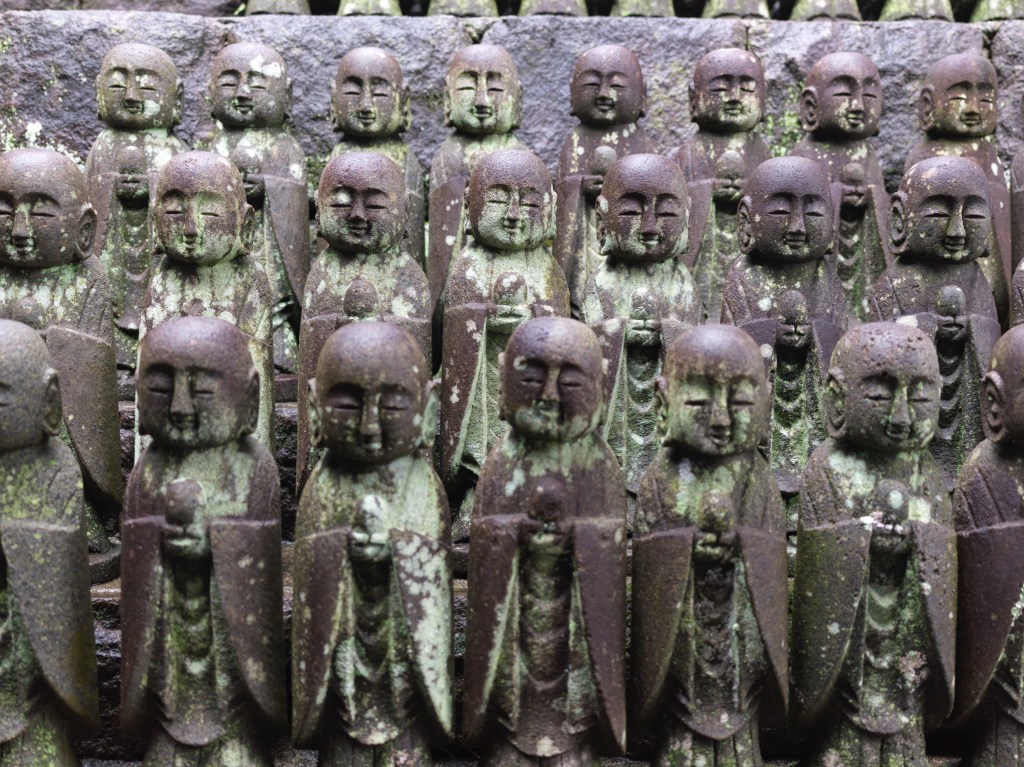
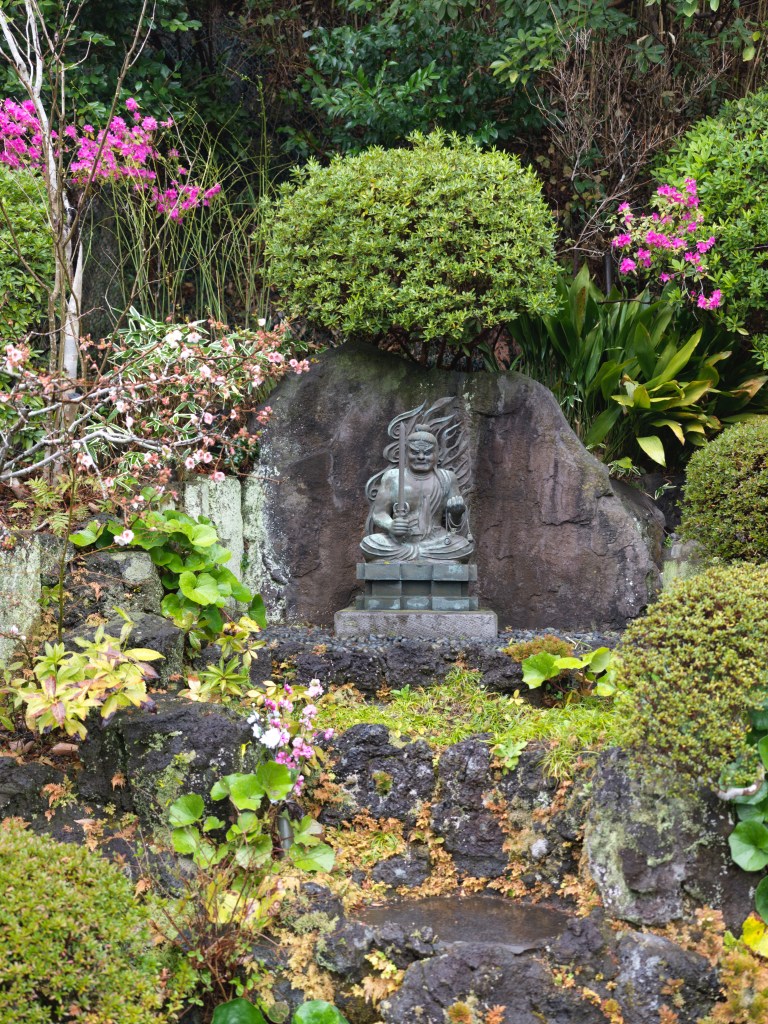
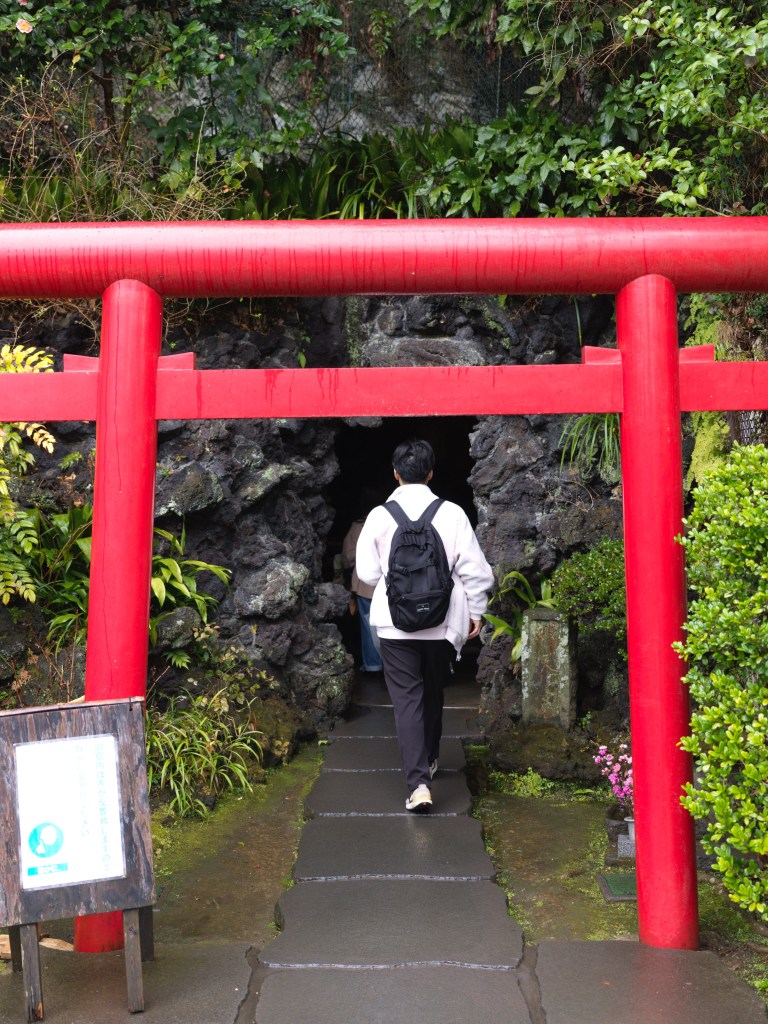
In temples all over Japan are ritual purification practices put into place as a means of ritual cleansing. Passing through this tori gate into the cave is representative of the idea that we can purify ourselves of negative thoughts and emotions (as also represented by the wrathful deities at the entrance). When I first traveled to Japan in 2008, I was surprised to find so many of these ritual practices in visits to all of the shrines and temples. It makes sense, doesn’t it? The practice of clearing one’s mind before entering a sacred place is an important practice to prepare one’s mind for what’s to come. Too, it helps get your “mind right” so to speak; to be ready to receive the gift of connection to awareness.
The visit to Hasedera and the Daibatsu in Kamakura were wonderful moments. The cold rain made the day just that much more poignant.
May you be happy, may you be well
 Reflections on the Path