In Ueno with Matsuo Basho

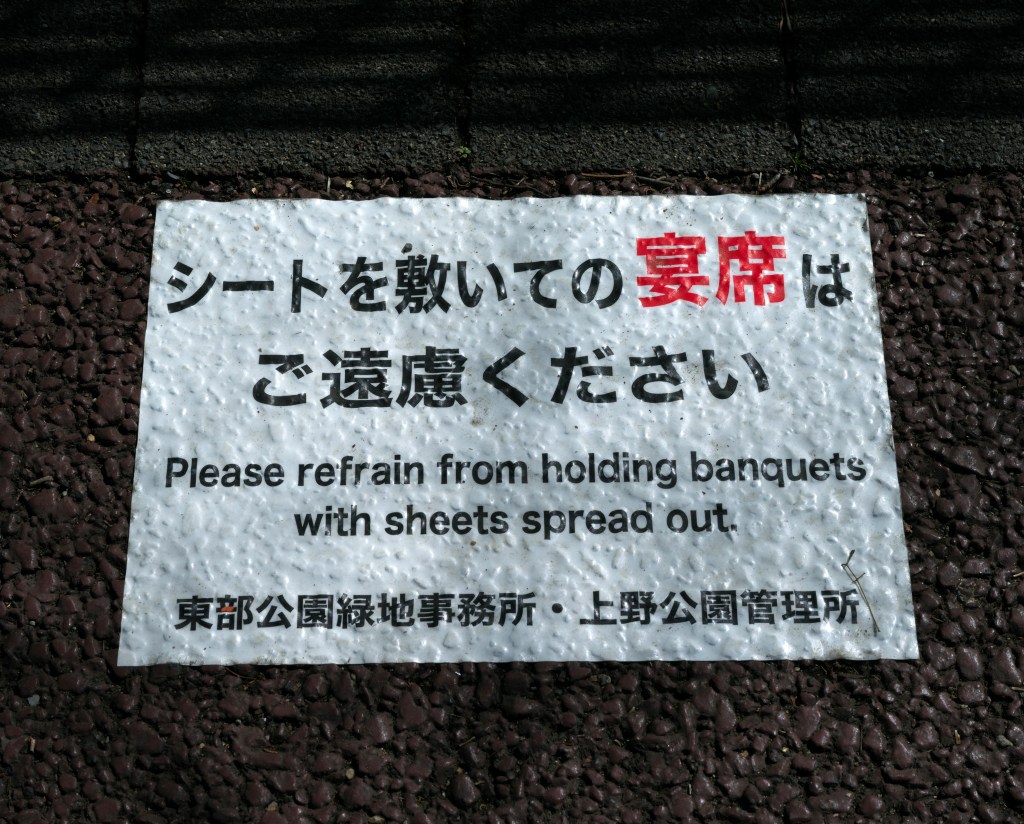
As I walked through Ueno park, I couldn’t help but recall Basho’s journey through this same area, five hundred years before.  The cherry blossoms were about a week from blooming and families spread tarps and blankets on the ground in anticipation of the event.  Games of Go and drinking happened alongside laughter, and some bold, angry interjections that eventually spilled into laughter and tears.  A young woman looked on both horrified and smiling as two men embraced in tears after a moment of fierce reaction.

Clouds of cherry blossoms! / Is that temple bell in Ueno/ or Asakusa? (Matsuo Basho)

The day was cloudy and a light rain sprinkled along the concrete pathways.  As I passed the empty baseball field, children ran past me laughing hysterically and their mother demanding for some compliance.  They ignored her calls and ran fearlessly into a huge crowd.  Soon, they came back around with Mom exasperated at the brief trauma.

At times I raised my camera for a shot and then walked slowly through the stream of onlookers and people seeking their own bit of solace in the trees of the park.  I was almost brought to tears seeing so many emotions on display, and especially feeling the laughter of adults and children, not so far separated in their common state of joy.
I was drawn into a museum, pulled by something beyond this mundane experience.  I walked to the kiosk and purchased a ticket for a special exhibition called Does The Future Sleep Here?  The silence of the museum invited contemplation and a brief jaunt down the stairs into the exhibition immediately swept me up in a moment of quiet reflection as I was struck by the intaglio prints of Nakabayashi Tadayoshi.  The effect of these images was melancholy and I felt drawn into the artwork.  The series shows a detailed image of flowers wrapped in a ribbon and progressively ending in a final panel of an ink blot on paper.  The disappearance of the image into ink on paper represented to me the dissolution of ego and expectation.
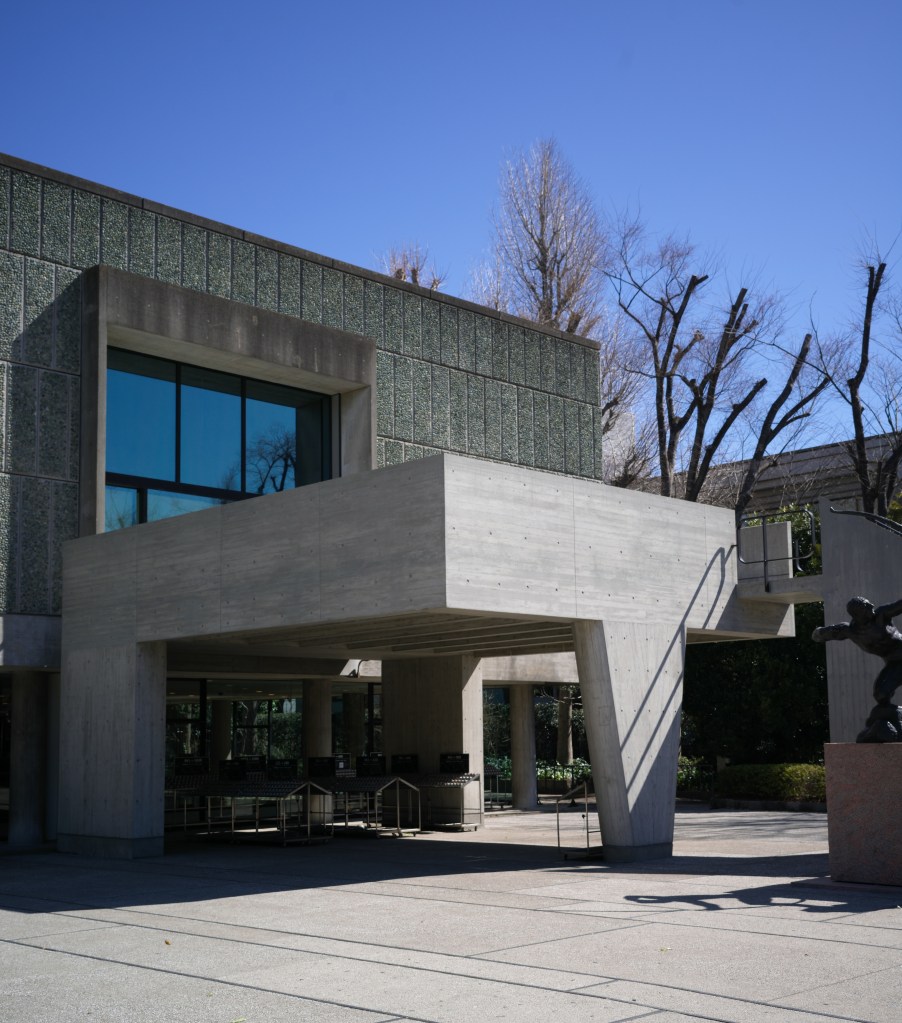
Does the future sleep here?

I struggled with a load of expectations about traveling to Japan even though I promised myself I would absolutely NOT grasp onto the experience.  And yet here I was trampled by my own mind and wandering through an exhibition a bit unmoored as I wasn’t sure exactly what I was doing here.  To say I was led into the exhibition might feel a bit ridiculous from my rational, thinking mind, and the fact that I ended up HERE rather than THERE spoke to me.
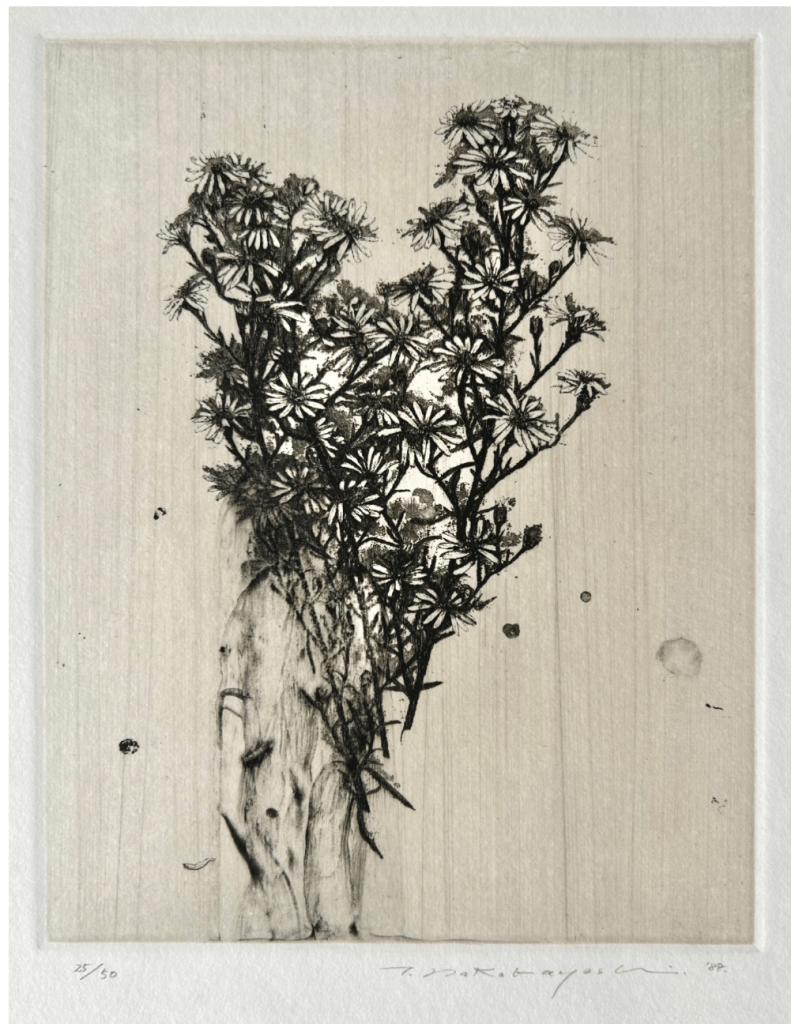
A representation of Nakabayashi’s work

As I reflected on this one choice, this one moment in time, it’s was easy to dismiss the choice as a simple binary; yes or no, zero or one; forward or backward.  The pull away from the spiritual to the rational is strong in all of us and I too wrestle with these ideas.  My Buddhist training tells me to question; to see but not label; to hear but not question.  As soon as we place a label or feeling on a anything that comes through sense, our mind begins the process of dualism; separating what we see and hear, etc into discreet ideas and images.  In that moment, we are grasping and our mind gets carried away into a whole series of thoughts, feelings, and emotions built around something that is just an object.  An object, any object, has no inherent meaning unless we apply some meaning to it.  Here I was, at the beginning of an art exhibition, creating a whole story about why I entered the building what I was seeing, and how what I was seeing related directly to me.  I immediately put ME at the center of the exhibition.  It was, in essence, about ME.

Of course, my critical mind kicked in and I realized that while the exhibition wasn’t about me, it spoke to me.  Yeah, I get it.  There really is no ME in this scenario and I’m forming ideas based on experiences and thoughts collected over a lifetime. These collected notions I assembled into a form of meaning as I walked into the exhibition and formed into a coherent narrative of something along the lines of “I’m experiencing an exhibition that is speaking to me and that helps me understand where I am spiritually, thoughtfully, and emotionally.”  Almost immediately the narrative emerged in my mind in moments after walking into the exhibition hall and seeing these prints in front of me.  I was in awe of the skill and vision of this artist and was emotionally drawn into the images and the feelings of these prints.  The experience was magical in a very real sense of feeling a resonance with the artist and the artist’s work.

Of course, I don’t know Tadayoshi or his intentions.  I do know what my experience of his art was and his art shaped my thoughts. I guess that’s what art is all about, isn’t it?  

As I felt through all of these competing ideas and emotions, I continued through the exhibition, now drawn into the idea that these artists and the artwork they presented were some kind of representation of my ideas.  In each gallery some art resonated more or less.  I was completely caught up in the feelings I expereinced as I met each of these artists through their artwork.  As I walked out of the exhibition and into a room with vending machines, I grabbed a green tea and sat in this small room drinking the cold tea from a plastic bottle and thinking about the experience.  Soon, I walked upstairs to the gift shop and purchased the exhibiiton catalog written entirely in Japanese with the forceful idea that I would read this book in its entirety.  Maybe it would take me years, and I would start as soon as I got home. (…and I have…)

Walking out of the museum back into the mass of humanity filling Ueno Park at around noon, I moved more deliberately, slowly bringing together the various thoughts in my mind as I stayed with the feelings that arose.  At that moment, I thought back to Narrow Road to the Interior by Matsuo Basho. Basho’s travels through Japan and his haiku that punctuated his journey came to me in a rush.  As I walked through Ueno I thought about his journals again and his brief remarks about cherry blossoms in Ueno.  More specifically, I thought about his play on words in the journal’s title, “Narrow Road to the Interior” meaning the interior of Japan and into his interior = his mind.  Captured by that idea, I delved into what I had seen and experienced and how those images were stirring me into deep thought about my journey, here, in Tokyo.
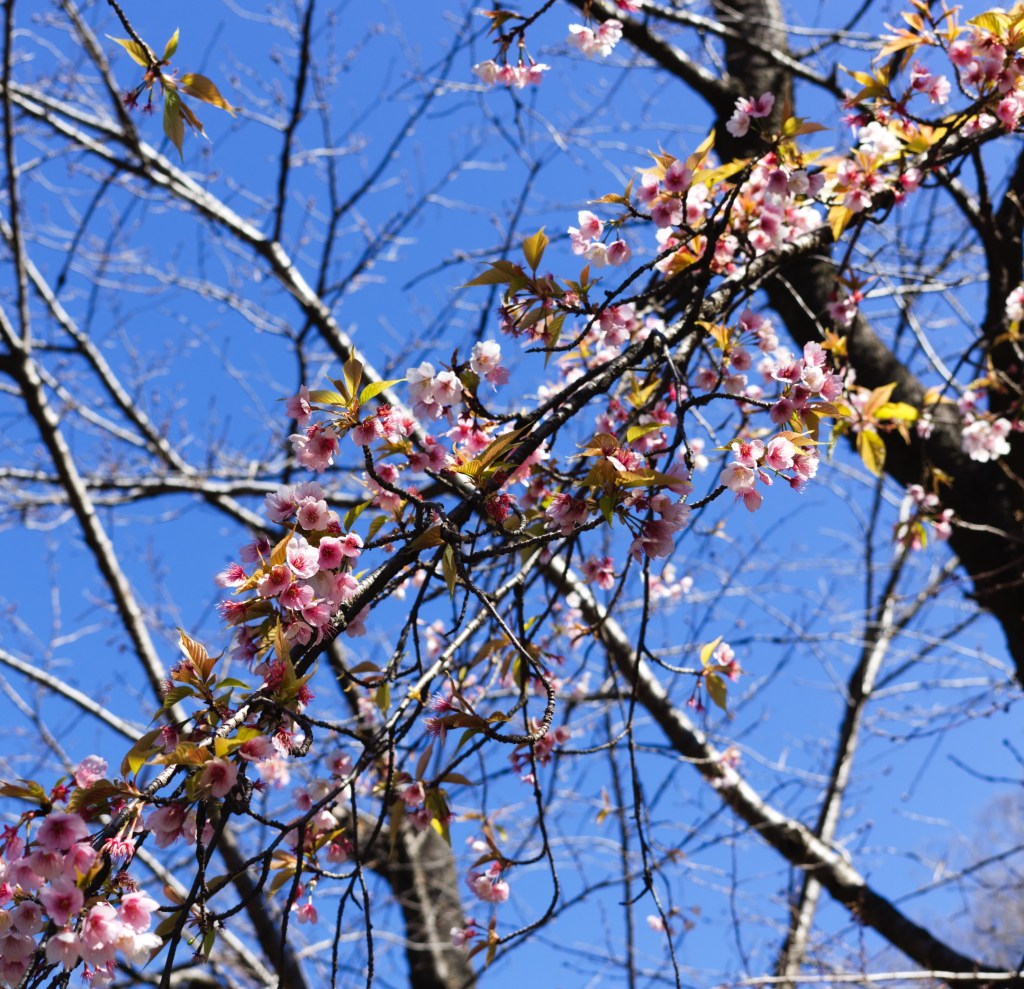
The first cherry blossoms in Ueno, March 2024

You see, nothing went the way I planned.  I found myself wondering at what I was missing and where I needed to adjust.  As Basho’s journey came to mind, I let go of the expectations about what I orginally planned and paid attention to what was in front of me.  In his Knapsack Notebook, Basho commented, “The first task for each artist is to overcome the barbarian or animal heart and mind, to become one with nature.” (65) The bustling streets, the people sitting against a wall looking into their hands, a mom and baby strolling along the street, in a hurry for something, and me, seeing it all pass me by.  Finally, I settled into an idea I read in Basho – it’s really not about the destination. I didn’t need to go looking for something; it would find me.

From what tree’s / blossoming, I do not know / but oh, its sweet scent! (Basho 101)

As I opened up for a different kind of experience, those moments unfolded in a myriad of ways.  I stopped trying so hard to do something and just walked.  Actually a better way to describe it is that I wandered.  Not lost and not in a direction toward something…of course, I wasn’t headed into a wall or anything…I was walking around, generally in the direction of Asakusa. Moments came and went as I walked past shops and alleys, people of various types and in various styles.  I took few photographs, even with camera in hand. It was just me walking.  I felt like I was on the narrow road to the interior and in this case, into a kind of walking meditation.  The light rain finally stopped, and a cold wind blew from the west, and soon I was cold.  The cold roused me from some kind of stillness and I thought about eating some hot ramen.  As that feeling rose in me, I decided to make my way to a private booth at Ichiran.  All of my noisy thoughts stilled, I realized exactly what I was experiencing: a beautiful day.

May you be happy, may you be well

References

Art Scenes – Find and collect your favorite art. (2024). Art Scenes. https://art-scenes.net/en/artworks/34191?gallery_id=153

Bashō Matsuo, & Hamill, S. (2019). Narrow road to the interior and other writings. Shambhala.
Elusive, Yes. Non-existent? Not at all!

The search continued as the sun dawned bright on an unexpected cloudless day. I woke with a mission: to head toward some out-of-the-way parts of the city to locate cherry blossoms.

I started by trying to navigate to Hie Jinga located in Akasaka. I rode the Ginza line to Tameike-Sanno Station and hopped off. If you haven’t visited Tokyo, it’s easy to wander in the wrong direction when leaving a subway and that’s what I did on this day. I walked out of the station and THOUGHT I was headed for the temple. My iPhone Google map sent me in a direction and I walked, dutifully, toward the shrine…or so I thought. The map led me astray, and I soon realized that I was going in the wrong direction. Once I figured this out, I looked around. I was in the middle of some large buildings and structures, and I couldn’t quite place my location.

Then, I saw a Japanese sign pointing to the temple. It was small and once I recognized the characters, I started walking in that direction; soon enough, I turned a corner and was the grounds for the temple. The lesson was THIS: use your eyes and look around to find out where you’re going. From that point onward on this trip, I looked at a map on my phone and avoided using the guidance from the system! The Hie Shrine sits on a hill and a series of steps leads to the main complex. On this day, a food ceremony was happening and I stayed to watch as the priests performed the ritual.

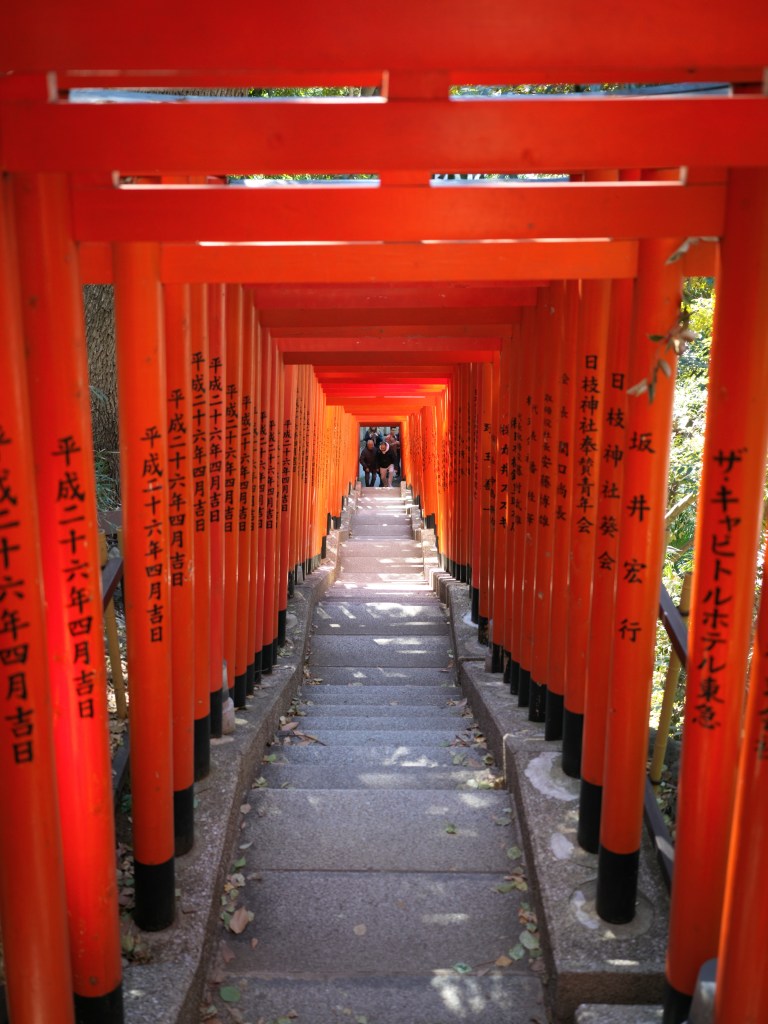
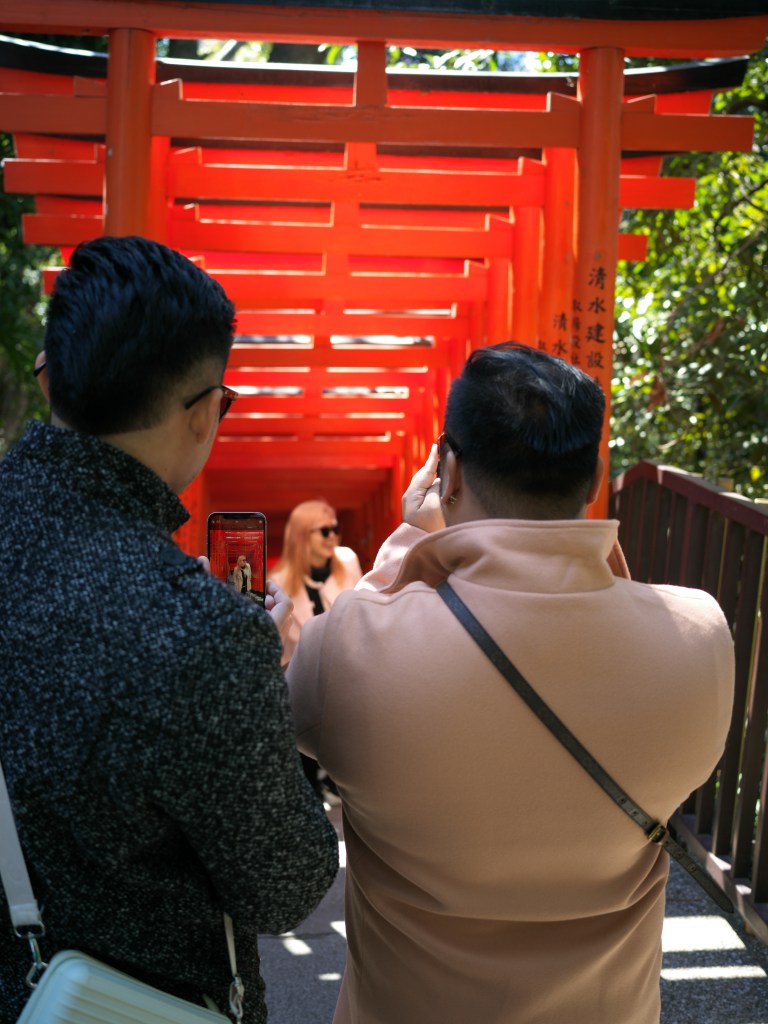
From there I located the Inari – the red torii gates that are reminiscent of Fushimi Inari. The gates are around the back of the shrine and a small group gathered to take pictures of themselves in various poses on the steps. These tourists, like me, were intrigued. Unfortunately, their interest led them to attempt climbing on the posts and trying to balance between the spans. More than once one of the group fell to the ground with the rest laughing. They changed their approach and just started photographing each other in suggestive poses. A small group formed trying to make their way down the stairs and through the torii. The group angrily refused to budge and blocked the way. At some point, another person simply pushed their way past the photographers.

Photography at its finest.
The walk through the gates….really a wonderful spot in central Tokyo

The cherry trees were sealed shut and so I decided to find another location. The wonderful Hamarikyo Park was my new destination filled with the ancient Yoshino cherry trees. The game was afoot (literally, because I was walking).

Walking all the way to this Park was a haul. The miles I trekked took me past the Imperial Gardens and through Asakasa all the way to the Shiodome area.

Crossing the bridge over the Sumida and into the park, the grounds were filled with ponds whose levels changed with the tides. Originally a home to shoguns and later Meiji leaders, the buildings were destroyed and never rebuilt. In their place were trees of various types and the cherry trees, while few in number, were present near the entrance.

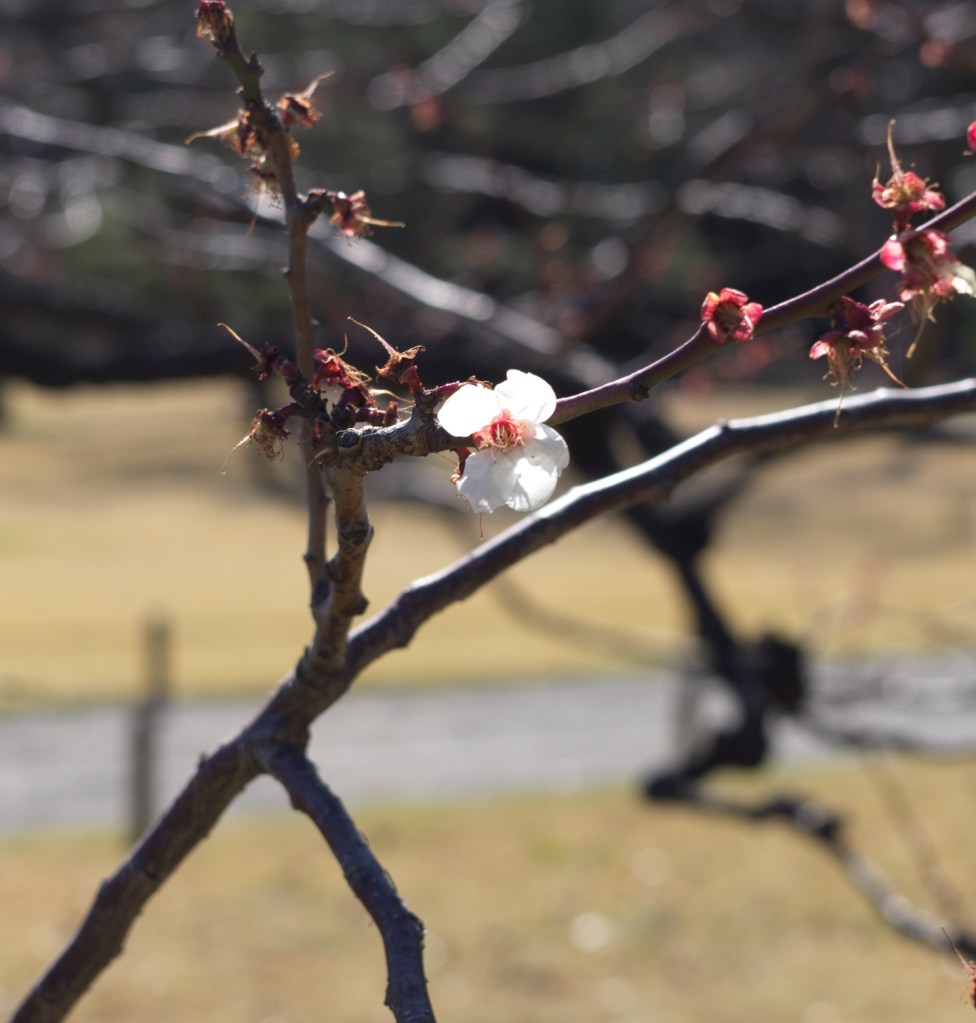
As I walked to my right after the entrance, I saw a group of Yoshino cherry trees and they were old, twisted symbols of ancient Japan. As I walked around the trees, I noticed a single blossom. I grabbed the shot.

First blossom in Hamarikyo Park

It may seem like a small thing, and this blossom changed my perspective in some way. Going into the park I was anxious, worried even, about my time in Japan. I had been led astray by the Google Map, felt like I was lost on the subway more than once, and just had a sense of unease as I walked through the city.

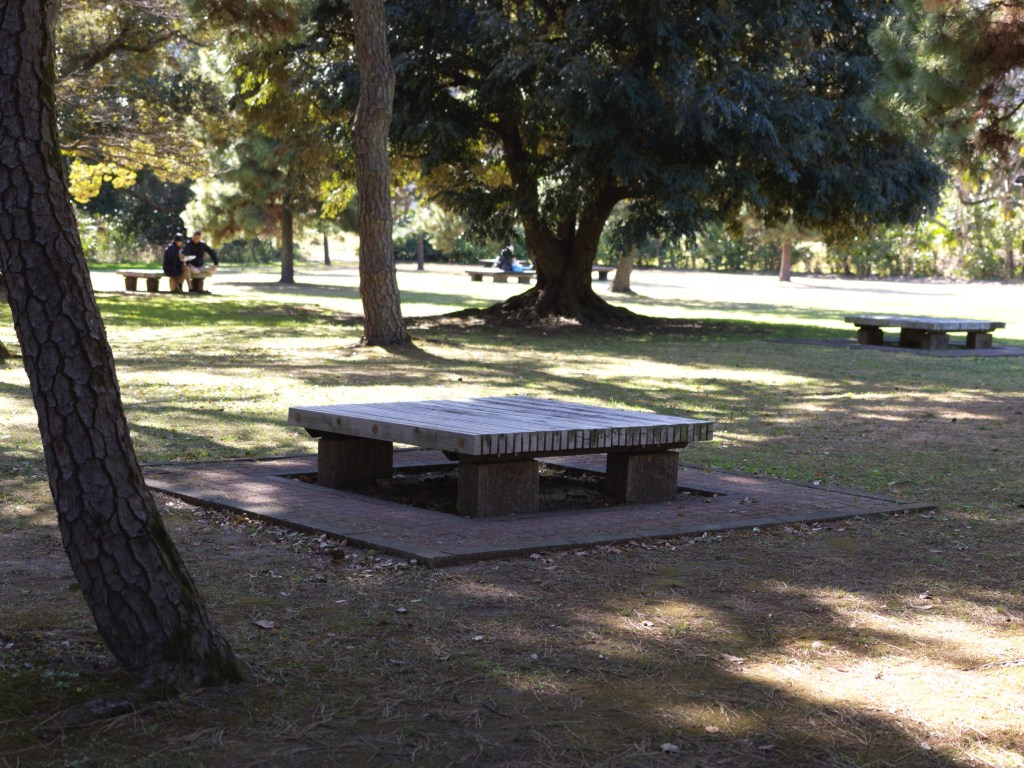
All of that sense and sensation dropped away when I saw this one bloom on the tree. Not far from this spot, groups of small tables were scattered in the trees and I found a place to sit and just be in the moment. My meditation began effortlessly and the crazy mind I had wrestled with for hours slowly dropped away. I watched, sat, and stopped. I’m not sure how much time passed as I sat there. I noticed the wind and chill sitting in the shade of a pine tree and a shiver passed through me more than once.

A place to sit at Hamarikyo.

As the day passed, I walked through the rest of the gardens and marveled at the simplicity and attention to every detail. The grounds are remarkable.

The Tea House at Hamarikyo
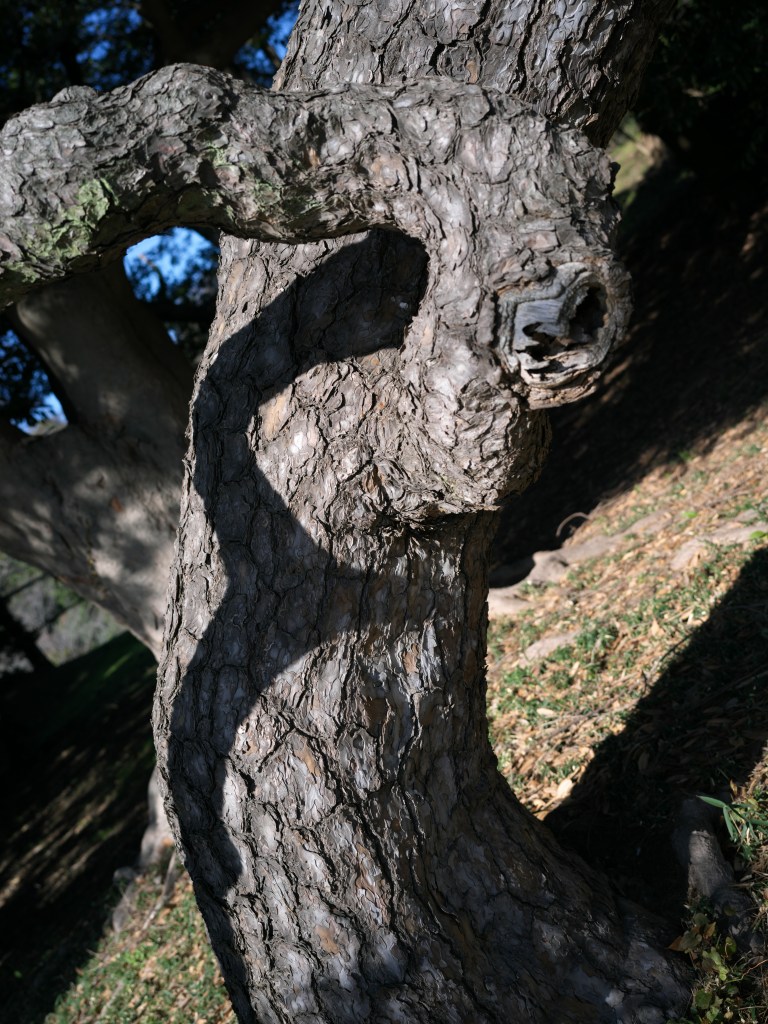
Shadows and Pine
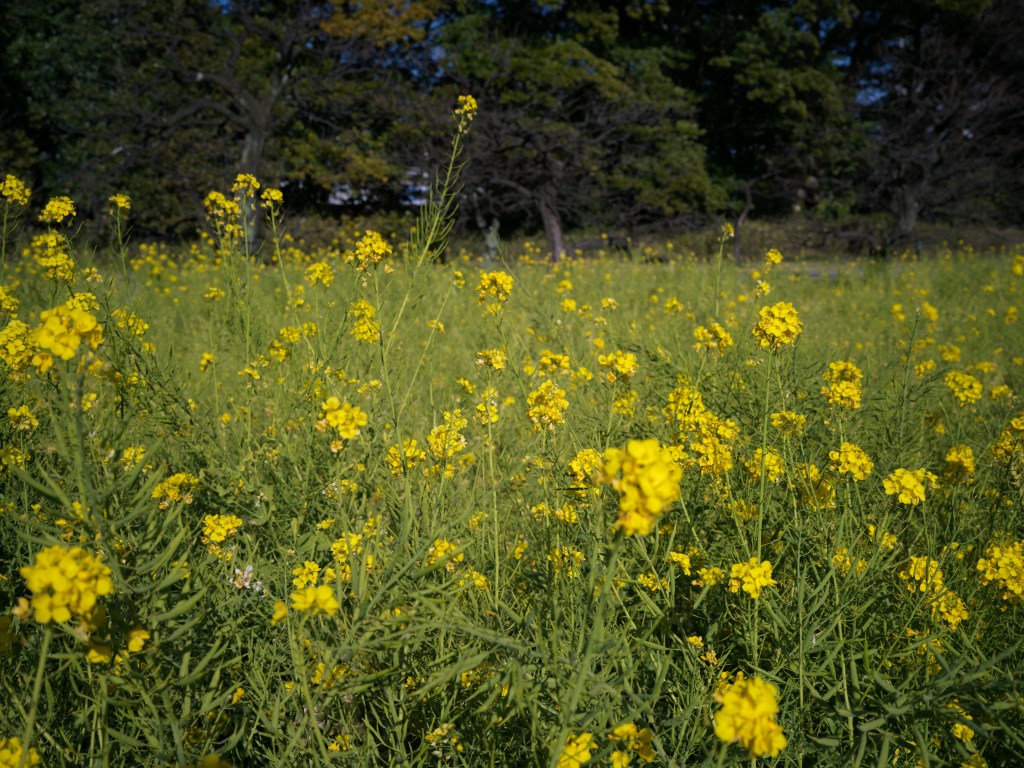
Flowers cover a meadow at Hamrikyo

I walked out of the park as the sun descended and the light cast interesting shadows on the ground. The walk back to the train station was quiet and I boarded the Ginza line to Asakusa. My day was amazing and in small ways, transformational.

May you be happy, May you be well.

Of Cherry Blossoms and Expectations

It’s cold. The wind is blowing hard and my umbrella, purchased at iSetan is not doing its job very well. The rain comes in at a sharp angle and as I walk, I stumble as the umbrella is pointed directly in front of me partially blocking my view. I imagine I look ridiculous, umbrella facing forward as the wind and rain pound my legs and feet. The chill starts to take hold and I search for some indoor space and stumble into a crowded coffee shop. I looked outside through the glass and noticed people making their way through the storm. So, here I was in Tokyo not really prepared for the maelstrom in front of me. Hmmm.

I came to Tokyo in part to see cherry blossoms. The wonder of finding very inexpensive flights and a very cheap room made the trip possible. I couldn’t believe my luck!

As I landed in the city, rain soaked clouds filled the sky and the darkness at 3:30 PM made for a very solemn arrival.

I made my way quickly through customs and to the Keikyu line to Asakusa. The rain poured from the skies and I wondered about walking from the station to the hotel. Would I be soaked? I left my umbrella at home by accident and now wished I had one handy. No matter. I’d be fine as the walk was less than a 1/2 a mile.

The wind and rain battered me as I walked onto the busy sidewalk. I hurried across the street and down an alley I remembered as a shortcut to the hotel. I made it into the building just as the wind nearly blew me down! My expectations of sunny days and cherry blossoms were slow fading.

As morning dawned on that first day, I woke early, dressed for the rain, and walked the short distance to Senso-ji temple and the cherry trees all over the grounds. It was a cold, cloudy day and the wind crossing the Sumida River was fierce. As I made it to the Haruman Gate, it was early, about 7:00AM and few people were gathered. I grabbed some coffee and wandered around, just looking for some shots of the trees and the temple. As I approached the first tree just to the right of the main shrine, the buds were tightly closed. The cold weather of the past week had slowed their bloom and I caught the trees just before they opened.

I headed up the temple stairs and had the room to myself as few people were awake to see the sights. The quiet was remarkable, having seen this sample place literally filled with people in the past. I relished the time spent and decided to head toward Ueno Park, about three miles away. Surely I might find some blooms open in that location!

I chose sidestreets and neighborhoods to walk through to the park and was soon alerted to my phone buzzing an earthquake alert. I looked around and people were going about their routine. Some stopped for a minute to see what would happen. A mother and daughter biked together to school and they paused for the alert and kept going. Workers in an alleyway kept loading a truck with trash, and an elderly man glanced at his watch as it buzzed, and then kept shuffling along.

Earthquake, Tokyo Time

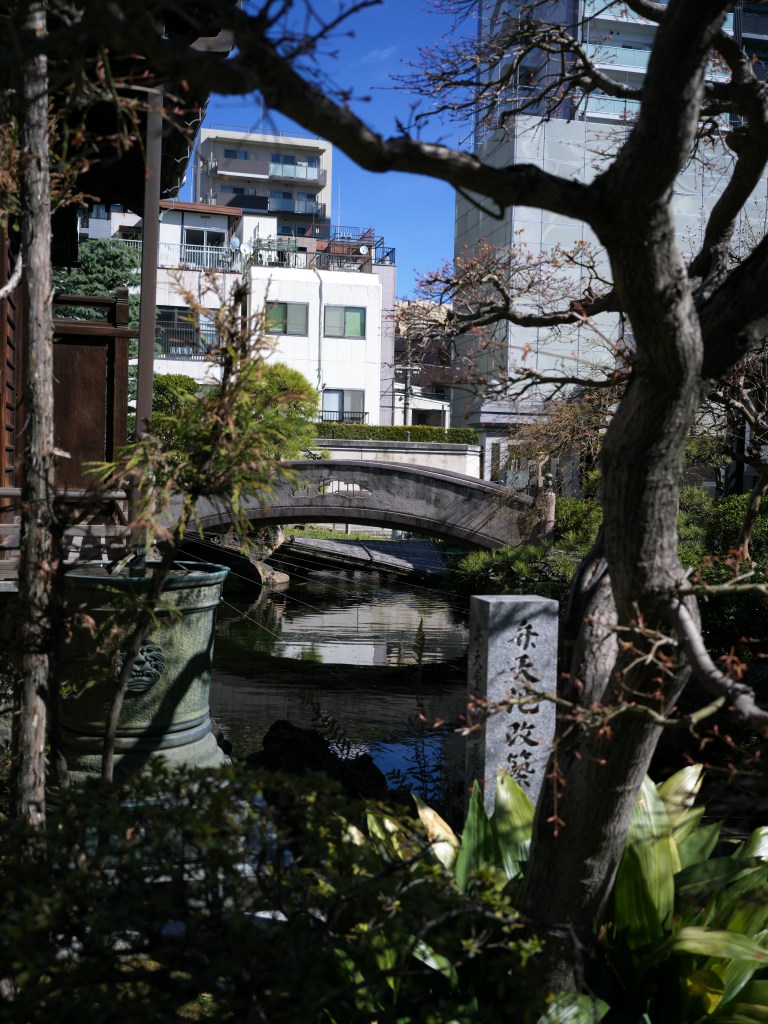
I’ve been in small earthquakes before and wasn’t too concerned, but the message caught me off guard and, as it turned out, a earthquake refuge was nearby, a small Buddhist temple. I went through the gates into the garden and looked around…photographing the grounds. A strange silence descended on the city and the birds I heard a few minutes before were silent. I wondered if they knew something I didn’t? As I looked around, I saw more signs of the day progressing normally and no one was obviously affected by the sirens and alerts. So, I did what everybody else was doing: I went about my day.

A refuge in Asakusa from the earthquake.

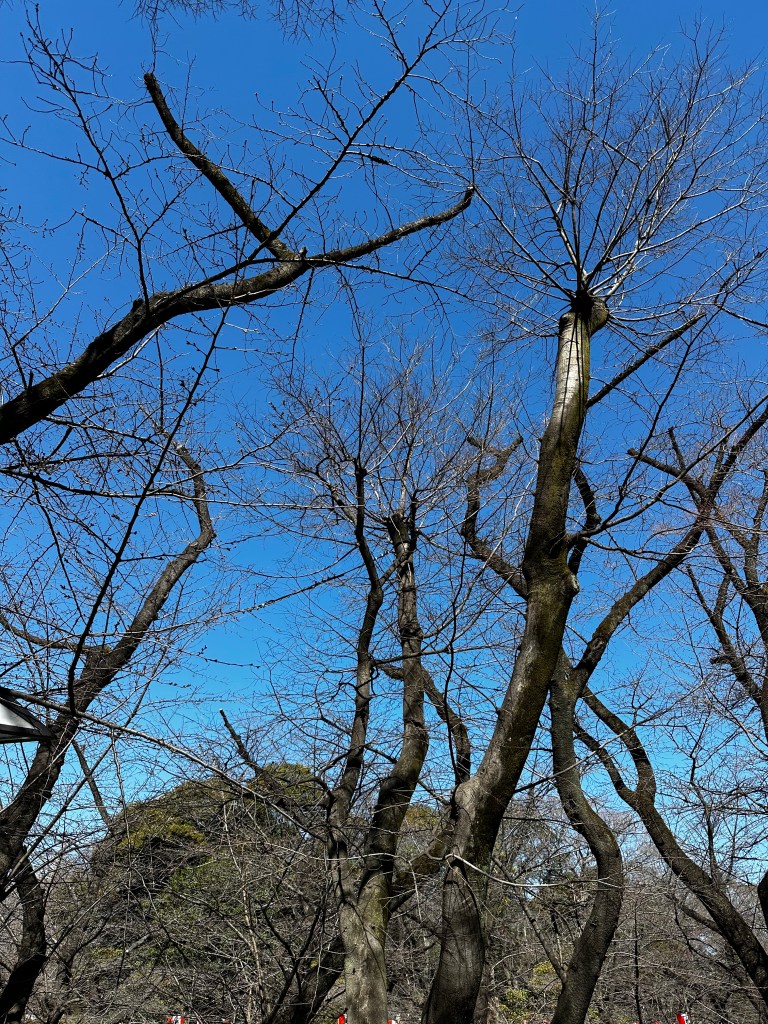
As I walked, the wind crashed between the tall buildings in near Ueno and it was intense. It pushed me around as I walked past an elementary school. Once on the main street, I could see the walking bridges that rose above the train tracks and city streets. I climbed the stairs and walked toward Ueno park in anticipation of finding the elusive cherry blossoms. Long lines of people made their way up the stairs and into the dedicated lanes for foot traffic into and out of Ueno. Lining the path were cherry trees, none of which had bloomed yet. The light rain and chill temperatures were testimony to their quiet and slow awakening.

Blossoms firmly closed in Ueno Park

As the day passed and I made my way to sushi and the hotel, I reflected on the situation I was in. Many of the things I wanted to do were rudely pushed to the side and what remained was me trying to recreate and reform what I wanted from this trip. That led me to rethink a few things:

  1. I had to brave the storm, no matter what.
  2. My choice of locations needed to change to accomodate some new ideas I had about what and where to photograph.
  3. To just let it all go…to allow these changes to happen without regret.

I decided to go on the hunt for cherry blossoms the next day, sure that I would happen upon a cache of these illustrious blossoms in some corner of Tokyo.

May you be happy, may you be well.

Crowded Space / Still Mind

One of the biggest tests of my practice has to do with my mind in a crowded space. What happens when I’m confronted with the incessant bombardment of noise, people, movement, and lights? In Tokyo this past March I walked into this environment wondering how my tortured mind would handle the impact of the mass of humanity in this huge city.

Once you arrive at Haneda airport, the walkway into Customs is almost silent….after the blast of jet engines for twelve hours or so, the silence is welcome. THat silence, of course, is fleeting as everyone gathers in a hall that processes your entry papers. I chose to use the Japan web online form for entry and it was flawless. A picture of my face, a QR code, passport, and then finger prints sent me into the country. Once out of the customs area, crowds press on all sides as many exhausted people try to find their way into the city.

On this trip, I knew what I was doing and had preloaded my SUICA card with credits for subway travel. I hopped on the Keikyu line and headed directly to Asakusa. The crush of people on the train meant that I stood for about 30 minutes until my stop came around. The noise of the train, the movement of the car on the tracks, and the shoulders touching almost constantly with the sway of the train were distracting and my mind was both foggy from lack of sleep and my mind trying to adjust to the sound of Japanese over the loudspeakers alerting travelers of the next stop.

As I slowly adjusted to the situation, my mind relaxed. I could focus on my breath and could pick out sounds that were masked before my awareness expanding. The heavy breathing of a passenger sitting near me, a child whispering to their mother, the shuffle of feet on the floor….all of it came into my awareness. Then, my mind settled and I was quiet.

The above description is representative of what I experienced in those first few minutes of being in Japan, a densely populated country. On this trip, I encountered thousands of people during my walks around the city, and found moments of reflection and solitude in a place filled with people.

In some of those moments, I sought out places that would contribute to or enhance my experience. In the caves of Hasadera Temple and Shrine, I met my quiet mind in the dark, chilly spaces above Kamakura.

Hasedera caves near the temple

In the main shrine room of the temple complex is a massive gilded wooden statue to Kannon, the Bodhisattva of Compassion. In the form depicted at Hasedera, Kannon has a feminine or androgynous look which aligns with the broader interpretations of Avalokitsvara in China and Japan as a female figure. Inside the shrine room, the light is dim and the ceiling rises above you as Kannon stands tall in a temple that originates from the 8th century C.E.

After the caves, I walked into the shrine room, past the souvenir kiosks. When I visited the room was silent and I fell into a deep meditative state. This change happens sometimes when I am in a sacred space and it certainly happened here. The quiet and lack of noise definitely contribute to the sense of spaciousness that I think is necessary for me to be meditative. It was a wonderful moment as I stayed for about 1/2 an hour.

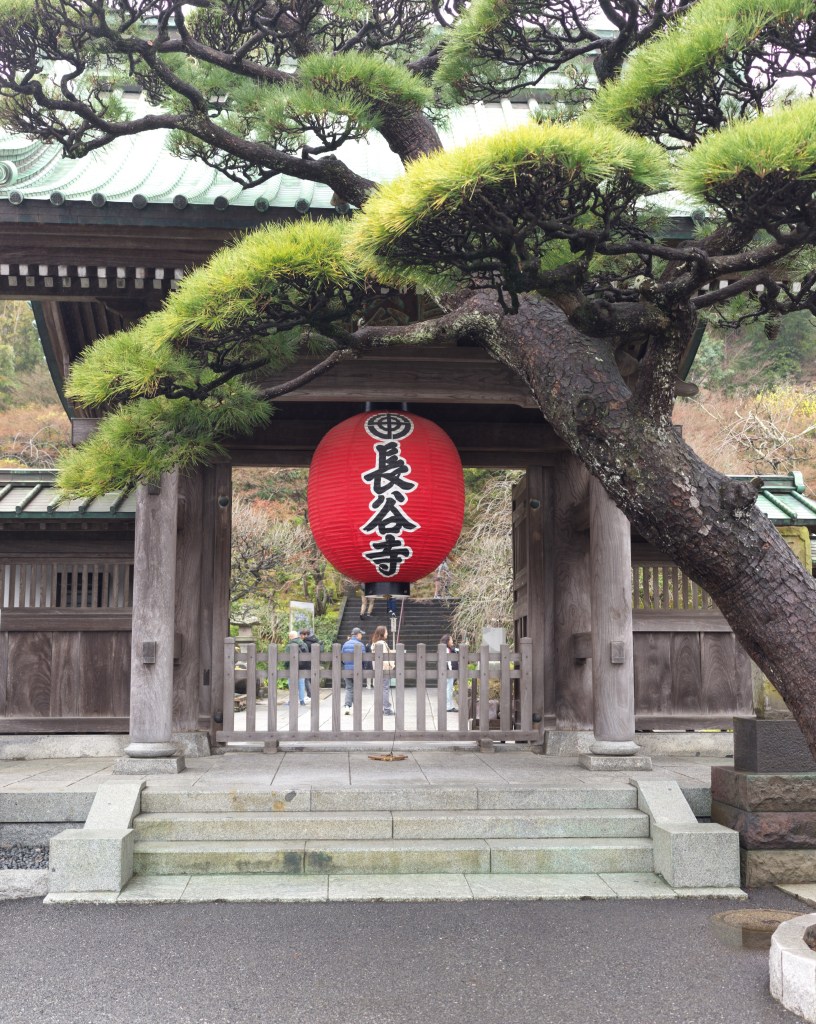
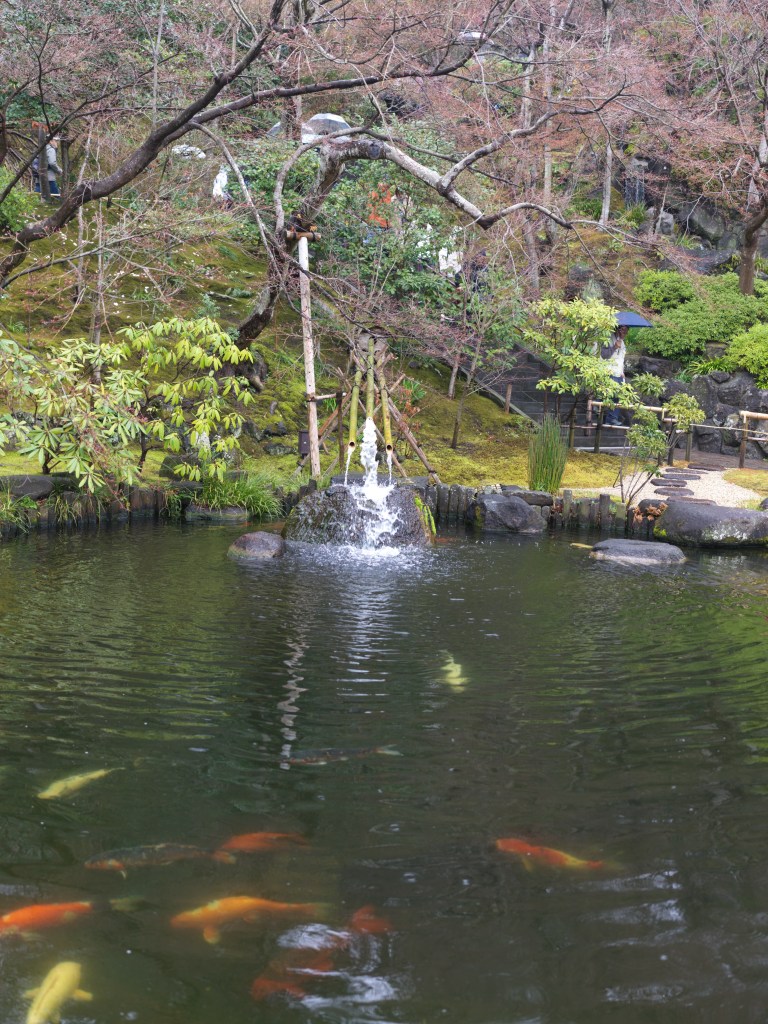
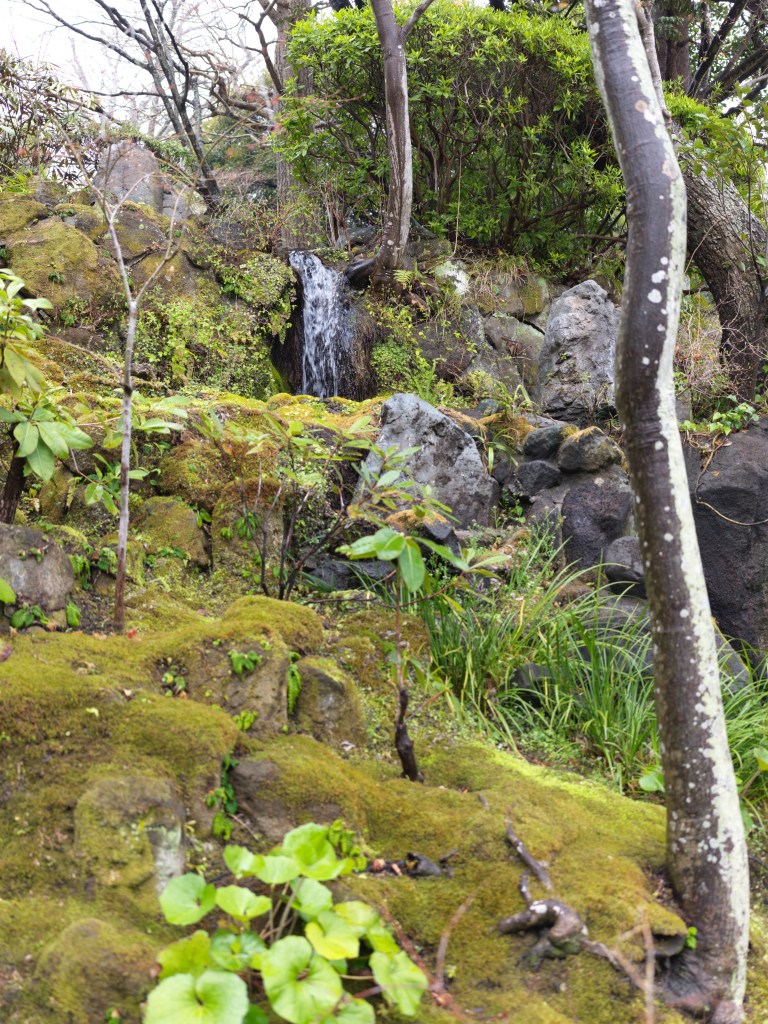
The grounds around Hasedera on this wet, cold day, were still spectacular. The koi pond, waterfall, and gardens are remarkable and the weather kept the crowds away on this day.

The way to Hasedera.
Koi pond and waterfall.
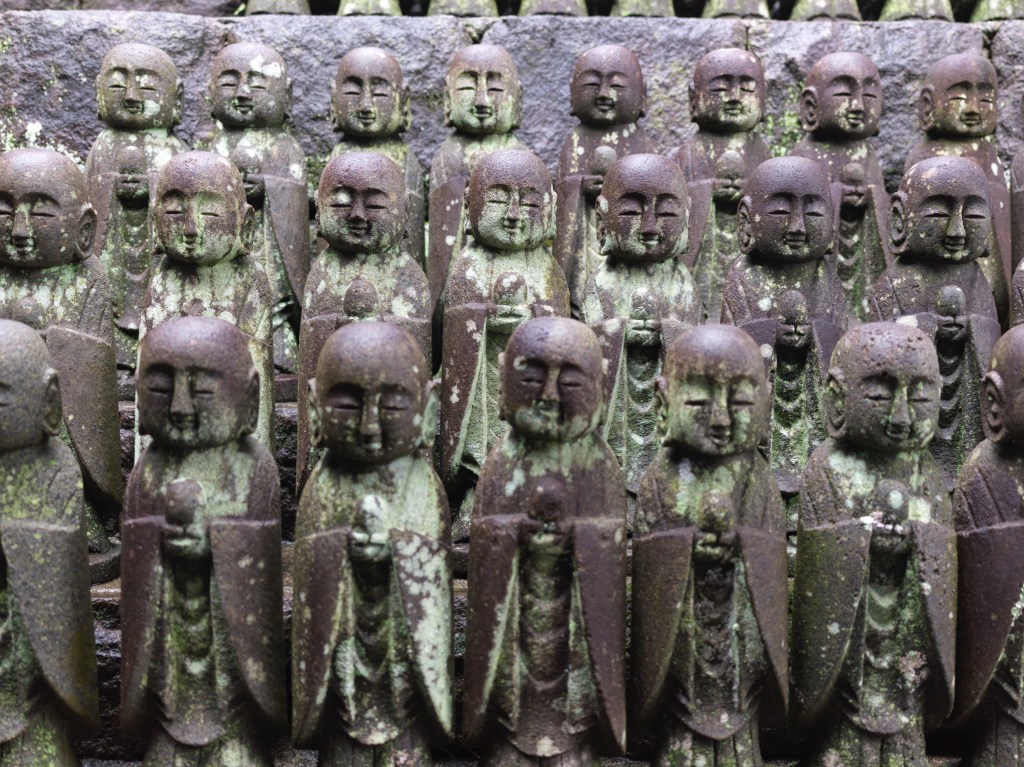
Bodhisattvas leading children after death.
Verdant green of the gardens at Hasedera.
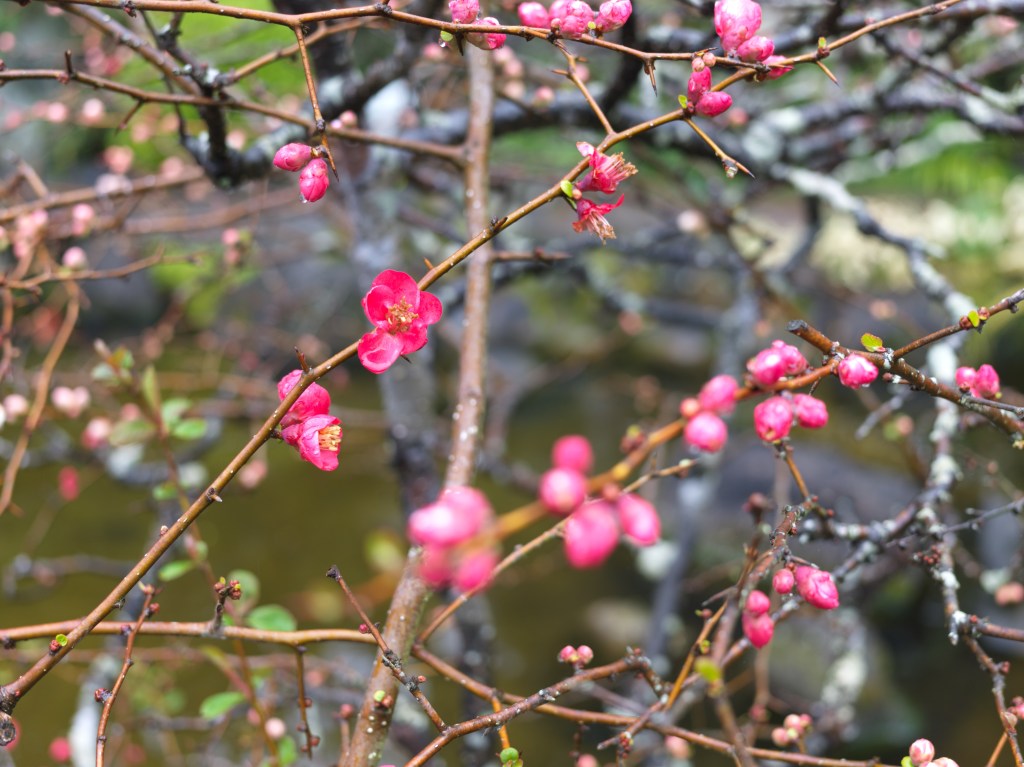
Blooms just beginning…
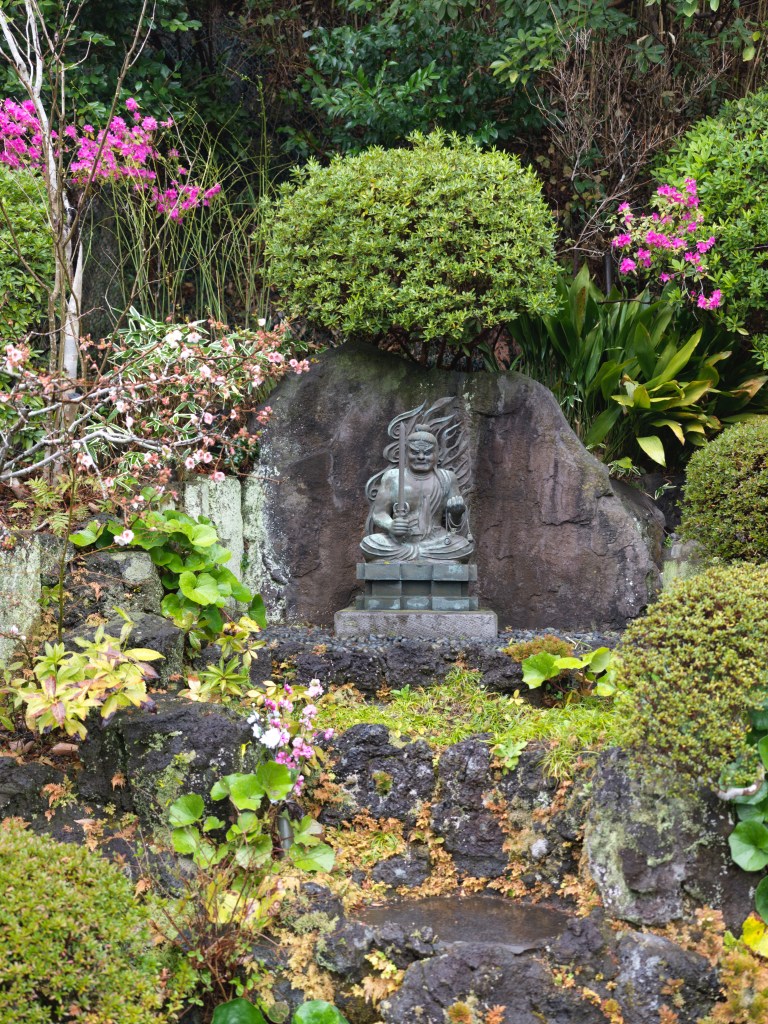
Wrathful Deities protecting the entrance to the caves.
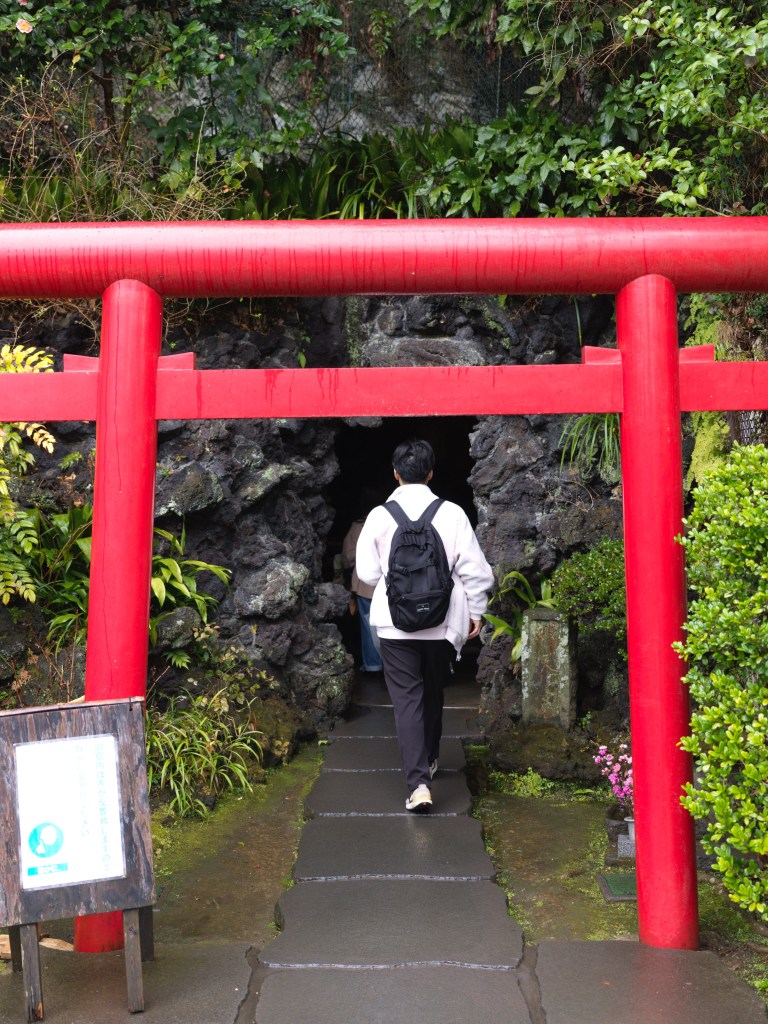
Entering the caves at Hasedera (wish I had a wider angle lens!)

In temples all over Japan are ritual purification practices put into place as a means of ritual cleansing. Passing through this tori gate into the cave is representative of the idea that we can purify ourselves of negative thoughts and emotions (as also represented by the wrathful deities at the entrance). When I first traveled to Japan in 2008, I was surprised to find so many of these ritual practices in visits to all of the shrines and temples. It makes sense, doesn’t it? The practice of clearing one’s mind before entering a sacred place is an important practice to prepare one’s mind for what’s to come. Too, it helps get your “mind right” so to speak; to be ready to receive the gift of connection to awareness.

The visit to Hasedera and the Daibatsu in Kamakura were wonderful moments. The cold rain made the day just that much more poignant.

May you be happy, may you be well