Things My Father Taught Me About Death and Dying

I cannot say that my father and I were close. We shared experiences and worked together on projects. Our conversations were stilted, short, and clipped moments of verbal interaction. We never shared deep conversations about life and how to life it, and when I faced struggles, my father did not have a lot to say.

That relationship entirely changed in the last two weeks of his life. I became his caregiver as he communicated his needs to me, and I did what I could to make his transition easier. Our communication together started as those conversations always had: short, direct statements. As the process continued, I stayed present, and the communication with him shifted from verbal to non-verbal, from rational to emotional. He expressed his feelings and intentions directly to me through a kind of direct communication through a look, expression, and an occasional word. While those around me could not understand even his most basic phrases, I understood him as clearly as I am writing this reflection. It was a strange feeling to hear someone who was non-verbal. That shift happened in the final days, and I learned more about communication in those moments than I have ever experienced in my entire life.

The lessons I learned were clear and specific. They mirror the teachings from Padmasambhava from the Tibetan Book of the Dead, and I experienced them directly from my father.

  1. Stay Present. Throughout the process, my father wanted no distractions. No TV, No Music. Just me or my mother in the room with him.
  2. Communicate Your Needs Clearly. My father’s requests were specific and simple. Water, a little bit of liquid food, and morphine for pain. That was it.
  3. As the Body Changes, Accept Them. My father did not fight his body and when he couldn’t sit up any longer, he let his body tell him what he needed.
  4. Say Goodbye. A few days before his death, my father said his goodbyes. His children and grandchildren gathered around him for those final words.
  5. Letting Go Requires Space. To leave this plane of existence, my father needed me and my mother to be out of the room. He passed only after we left.

I don’t pretend to understand all of the teachings from the Bardo Thodol, and my small insights helped me through the last moments of my Dad’s life. As I sat with him, I recited the chants and prayers I was taught in retreats and classes through Rigpa, and from Dzongar Khyentse Rinpoche. I chanted the Benza Guru mantra, the parts of the Bardo Thodol I had been taught, and used my prayer beads as a means of keeping my mind focused and present with my father. While I wasn’t in any way trying to convert and change my father’s path, these practices helped me through the process and taught me how I will hopefully approach my own death.

As I integrate these moments into my life, I am so grateful for the chance to be with my father along this journey. I came to understand as completely as I have ever had the meaning of life. It was profound, hopeful, and compassionate. I can only wish a simlar experience for everyone open to being present in the moments of death and dying.

May you be happy, may you be well.
The Echoes of Death: In the Arms of Dorje Drolo

The sound resonates through the wood, and my heart races as I half stumble, half run away from the noise.  The reverberation of that sound shakes the ground, and I am terrified.   I can hear the deep, mournful breathing behind me at a distance; this creature must be huge.  I recognize the sound suddenly as giant footfalls shaking the earth beneath me.  I quicken my pace, struggling with my damaged body and clumsy footwork.  Around me, people are fleeing this being as well, some tripping and falling, others shoving people out of their path as they hasten into the open field in front of us.

            I’m suddenly terrified, shaking in fear even as I take running steps onto the grassy plane in front of me.  I know I’ll be caught as I can feel rather than hear the rapidly approaching beast behind me.  I’m losing this race.  I hear screams behind me, and I try to make my mind work: flee or turn and take my chances? A crash sounds in the distance, and through the trees emerges a deep red creature ringed in flames now roaring at the people running from its arms outstretched to crush any that it might grab.

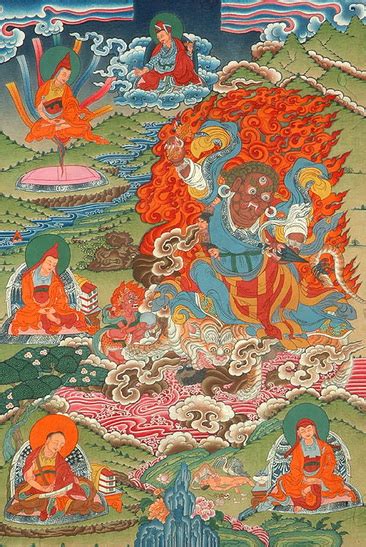
            In a moment, I turn and face the creature.  A crown of skulls line its forehead, and the red body and face exude a kind of violence.  Huge eyes and nose dominate the face, and, suddenly, a grimace or twisted smile opens its mouth as rows of sharp talon-like white teeth emerge from the darkness of its mouth.  Flames surround the body, lapping the edges of the grass, causing a black soot to emerge from the feet and hands. Soon, a couple of people are swept into its embrace, crushing their bodies as blood shoots in all directions, further changing the color of the grass.  A dark ichor stains the green grass black, and I stay fixed in my position, watching in awe and terror at the sight.

            As other people are wrapped in his deathly embrace, the creature turns and looks straight at me, the only one who stopped in the mania of the crowd.  His eyes pierce my mind, and I am almost brought to my knees, struggling to stay upright, fighting the fear that has now taken hold of me.  Blood flies again, this time splattering me on my face and hands.  I look down to notice my hands covered in blood.  Time slows, and I look up again, seeing now who this being is: Dorje Drolo, wrathful deity.  

            My mind reaches back into the recesses and archives of my memory, pulling forth the teachings on this being.  It is, in fact, a manifestation of my mind.  The horror of the feature and the blood on my hands are all physical manifestations of my mental formations.  And what can I do?  The death seems so real, the violence so tangible.  What can I do?

            Out of the corner of my eye, I see a wooden chest.  It’s huge and covered in metal straps on the top and bottom.  The lid is open, and I have a brief thought: force Dorje Drolo into the chest.  I run at the creature, catching it off guard, not expecting someone as small as me to attack its position.  A Phurba knife descends from his left hand headed directly toward my heart center.  I steel myself and step away from the knife as I come into contact with the being, pushing hard to my right.  Dorje Drolo stumbles and falls backward, its body hitting the opening of the chest.  Flames threaten to engulf me, and I push hard against its resistance, using my entire weight as I shove this red beast into the chest; its arms and legs kick and flail.  Instantly, I wake from this dream, shaken by the experience that was almost entirely in my head.  I’m sweating, breathing hard as my mind reorients into the present moment.  I feel drugged, not lucid, the remains of the dream hanging on like the arms and legs of Droje Drolo.  Staggering out of bed, I walk through the house, still feeling the horror of the experience. I cannot go back to bed and fall into a chair.  I’m dazed, confused, and in wonder.  What does it all mean?  I’m in a liminal place, neither in one world or another.

            Of course, this all makes sense.  I prayed over my father for weeks before he died, and I envisioned the best possible outcome for his transition from this life to the next.  My meditations on death and dying were informed by teachings from Sogyal Rinpoche and Dzongar Jamyang Khyentse Rinpoche.  While I was able to incorporate some mantra and meditation, I am no monk, and my feeble attempts at helping my Dad may or may not come to fruition.  What I do know is I am dreaming in such a way that these meditations are coming through me in vivid color and dramatic experiences.  I wonder, each night before I sleep, what new story will enter my mind, what strange experience I will face in the dreamworld I create?