Struggling with Myself in Japan

The lights on the stone shimmered as rain fell on the Kaminarimon Gate and Senso-ji Temple, wind blowing through the city canyons as I shivered against the gale. It was early in the evening, maybe 9:00 PM, and I kept trying to grab a shot.

Kaminarimon Gate, tightly cropped and shifted

My camera fought me as the rain splashed drops of water on the lens making focusing hard in the dim, wet light. I tried again, holding the camera in front of me to capture the feel of the night: windy, cold, wet. I couldn’t focus on the scene and the shot looked stupid. I pulled out my phone and tried to grab a shot more quickly. The wind pushed me slightly sideways, and I had to take a small step with my left foot, my shoe plunging into a puddle, the water soaking my pant leg. I groaned and tried to steady against the pressure coming from the Sumida River not more than 500 feet from where I stood. I shuffled, took a picture, turned slightly, and took another. These were grab shots, off-kilter moments of photography that had become too common on these first days in Japan.

Headed to Senso-Ji
Rain-soaked Asakusa

As I grabbed another, I wondered at my luck – or lack of it. I’d planned a solo trip to Japan, a trip I’d wanted to do for so long and here I was failing at photography at every turn. My shots were pedantic, frozen, and lacked any kind of sense of place or reality. Since I had arrived just a couple of days ago, it all felt silly; nothing was working out and I wondered why I was even here. What WAS I doing?
Tears came to my eyes as I felt a wave of deep, dark sadness. I questioned everything in my life up to this moment and it all felt so pointless.

Waves of sadness splashed over me as the wind whipped around and through me. The worst part, the very worst part in this moment, was my failure at photography. I’ve been taking shots since I was a small child, introduced to photography by my uncle Henry. My first camera, a Kodak 110, I used all the time. I took photos of the dumbest things and Henry insisted that I use only Ektachrome or Kodachrome for my shots. I still have piles of tiny slides from the days I used that plastic Kodak.

Thoughts about Henry and photography flooded my mind, and I was transported to a conversation we had about using his Nikkormat camera. Henry was particular about how I used the camera and was worried I didn’t have the understanding or skill to make it work. We talked about it and I brought the camera to my eye. It was heavy and holding it up was a chore. We were at an old lumber mill that was collapsing near the Oconee river in Georgia and I was trying to capture the strange patterns of wood in various states of decay all around me. Because I had trouble holding the camera, the shots that emerged were slightly blurry. I only got one good shot out of the six or so he let me shoot. The rest of my photos were from the 110 and we walked around the area, the smell of rotting wood strong in the moist Georgia air.

I gave into the rain there on Kaminarimon-Dori and started to walk to Ichiban Ramen just around the corner. This famous ramen shop was downstairs off the sidewalk, a tiny spot popular with tourists and locals alike. I held the handrail as I walked into the bowels of the building. Water was running down the stairs from the outside as no door was closed to the inclement weather. I made it to the landing as a short line of people gathered to purchase their ramen from the machine in front of me. The machine took Yen and I inserted the bills into the machine and chose my selections – spicy, thick noodles, no pork, and extra onions. I shuffled forward filled out a form confirming my choices and was directed toward a seat – only one available in the tiny, crowded space. I sat, my bulk occupying more space than two people in this restaurant. Most folks were half my size and the spaces were small….the seats were much smaller than ones in the U.S. and sitting here was more like perching on a wooden stool rather than seated in a comfortable wooden chair. So, I squirmed a bit as I waited the four minutes for the food. The noise was a constant drum of sound with an occasional tight laugh. Everyone in the room on this night was Japanese and the tones and sounds were muffled. It was a relief to be in the space and among people who were generally quiet and contemplative.
I looked around and rose to get some water from a container. Squeezing through the space between the tables and chairs required me to move sideways, a practice I was comfortable with. I made my way, got two glasses, and returned to my table. Once I sat down, the ramen bowl was brought to me and I offered my thanks “onegaishimasu” and then a more quiet, “Iradashimasu” in gratitude of the hot food on this cold night. It’s not common for folks to linger in restaurants in Japan and so I ate efficiently. Not quite cramming the food but eating. It reminded me of reading Zen Mind, Beginners Mind years before with the statement, “When you are eating, eat.” So I ate. The warmth of the ramen and the chewy noodles comforted me and I left behind my sadness for a moment and reveled in the fact that I was sitting in the restaurant, a place I visited not more than nine months before, enjoying the moment in Japan. A sense of well-being settled over me and I sat, for just a minute, in the awareness that I was so lucky to be here now.

I didn’t want to leave this space but the tiny seat and the constant flow of people into the restaurant made me move my things…camera, umbrella, rain jacket. I rose, slowly, and donned the jacket as a few water drops fell to the ground around me. I steeled myself for the upcoming storm outside and made my way up the stairs, a slippery mess from the water on the slick, maroon linoleum.
I stepped under a roof that sheltered me from the deluge and I walked a few feet to the crosswalk. The streets were relatively quiet and I walked across the street as the light shone giving me a series of dots marking the time to make it to the other side. Wind whipped between the buildings in my face and I turned a corner toward the Sumida and across the Azumabashi bridge over the river. As soon as I got ½ way across the bridge, the wind was brutal. My umbrella was no use, and I pulled my hood down around my face and pushed across. I was staying in Taito City in a small hotel called Rakuten STAY. It’s off the beaten path and as a result the cost is reasonable. I walked past the Asahi Brewing Company headquarters. A few people passed me headed home after work. I found my way between buildings and to the Hotel. The rain had subsided a bit and I made it into the lobby with iPads that summoned employees via video. I headed up to 606 on the top floor and got ready for a blast of wind that I was prepared for this time. The doors of the hotel rooms faced outside, and rain and wind pounded the walkway. As the elevator doors opened, the wind hit me and I walked quickly to the room, pressed the code on the door, and entered the room. As the door closed, the quiet of the room was noticeable and I grabbed the remote for the heater and punched 74. Within minutes the room was warm.

Inside the doorway I removed my shoes and placed them in a small closet with my jacket and umbrella. The sound of the storm, a distant hum outside my room. As I took a single step into the space, I noticed why I chose this space: cartoon pandas painted on the walls next to my bed. The space made me feel light, less heavy, less taking myself so damned seriously. I sat on the bed and took off my pants and shirt (wearing layers against the wind) and headed into the tub/shower for a quick, warm douse of water. I dried off and dressed for bed even though it was only about 10PM. I snapped on the TV and watched Japanese Variety shows in their grand silliness.

As the sound of the Japanese jokes spilled over me, my mind went to work, trying to make sense of the day, the trip, my life, and just about everything else I could cram into my head in this tiny room. I quickly settled down the mess by breathing deeply a few times and relaxing into a meditative state that came easily. I lay there (no real space to sit comfortably on the floor) and let the thoughts rise as they would. The sadness quickly took over and I wondered at my choices. My self-criticism was strong, and I was so frustrated by my photography. Judgment raged for a moment in my head, and I told myself to slow the fuck down….to relax into moments rather than seeking them out. The photos would come to me…gradually. The thought dissipated and another arose: what am I doing here? What is my purpose?
Before I decided on this trip last year, I made myself a promise: I was not going to go to Tokyo with a purpose. Aside from taking photos, I did not want to DO anything…I planned to wander through the city hitting parks and streets, letting photographs come to me, and deliberately not being any more purposeful than that. No touring, just seeing.

I lay there in my mental struggle, those thoughts came back to me, and I let these feelings wash over me…it was OK to not have a single image to share or hold. It was OK to just be in these moments in this massive city.

My mind cleared, my thoughts collapsed, and I was in a meditative state. The energy of the mental struggle exhausted me and I slowly dozed off to sleep, turning off the TV as I lay on a buckwheat shell pillow, the crunch a kind of murmur in my ear.
Wandering Lost Around Enoshima

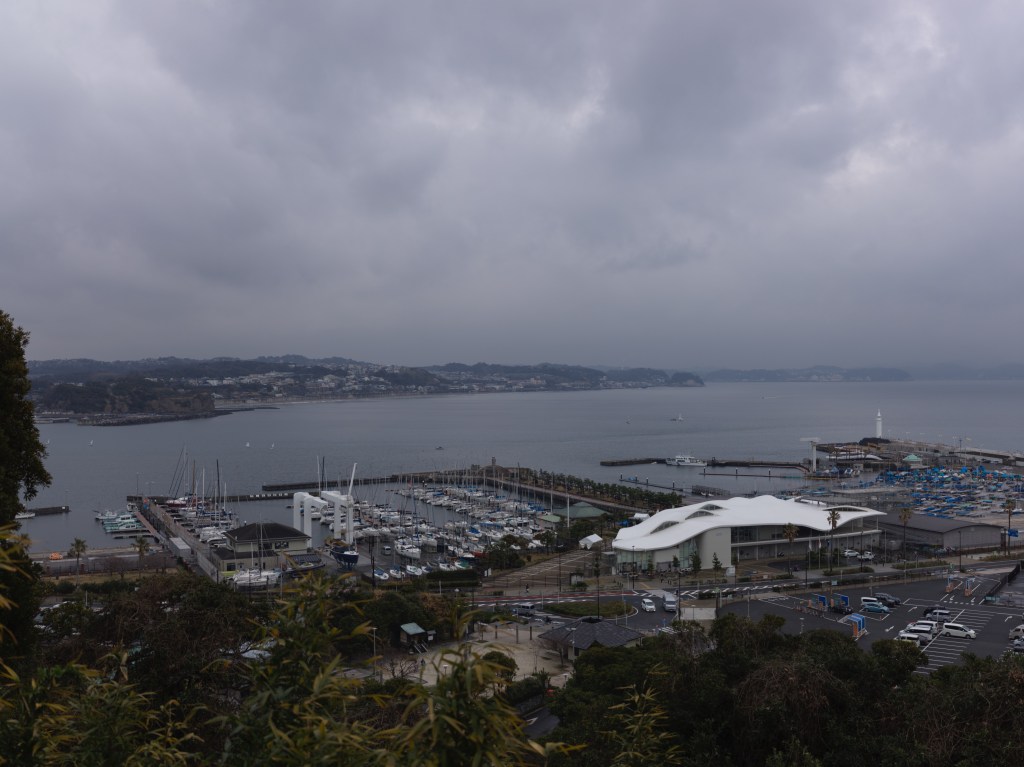
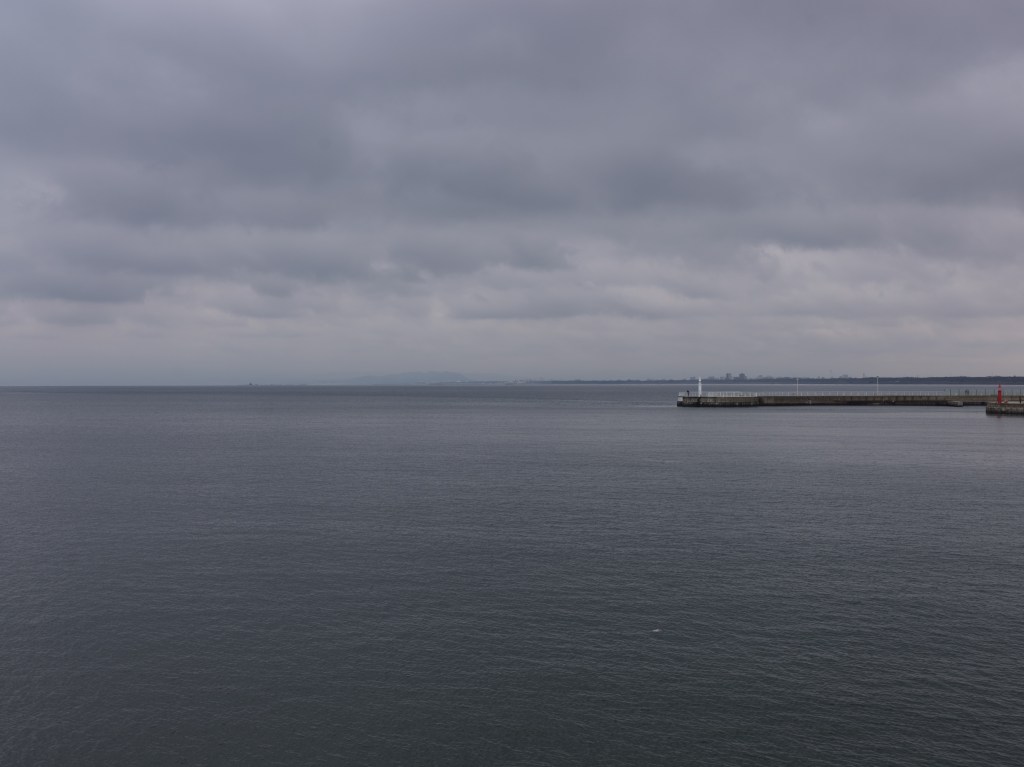
         I took another step and the light rain increased intensity once more.  While the stairs felt stable and I had a decent grip on the concrete structure, I felt frustrated and a little lost as the stairs winded around Enoshima Island.  I looked out at the marina, the dark clouds hanging over the coastline and wondered if this was the day I get drenched by a soaking rain.  One more step up. Two. Three.  Wait, am I counting steps now?  The breeze blew into my face and rain came at me sideways.  I had no idea how close I was to the top of the mountain and the stairs, right now, felt interminable.

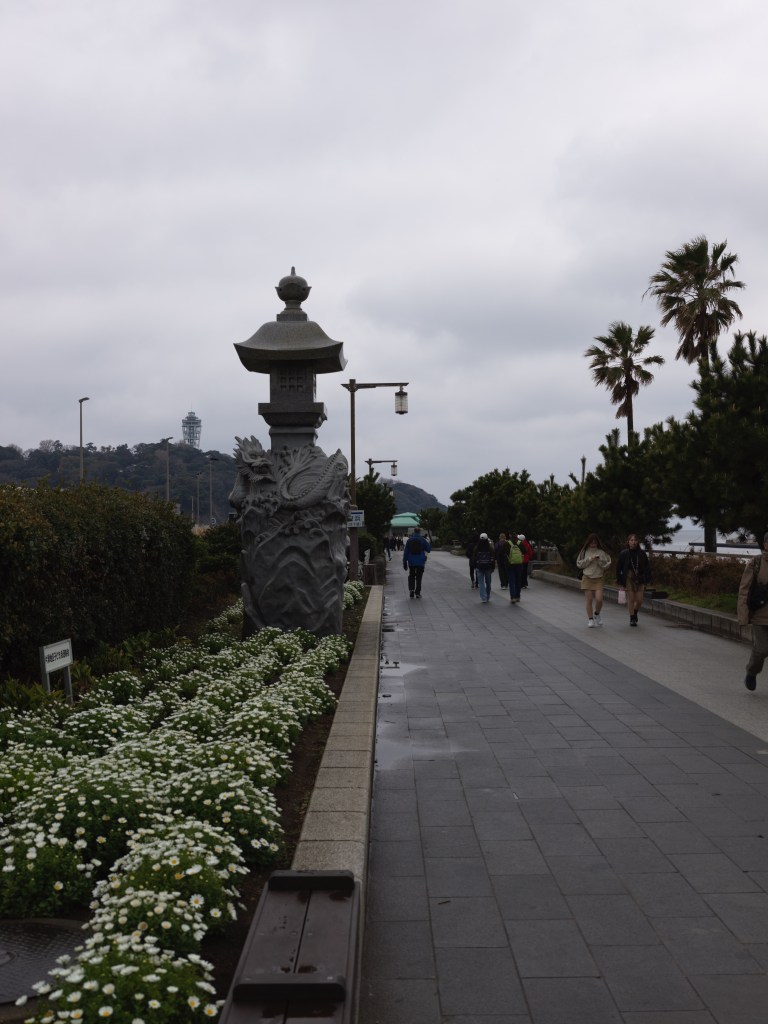
         Enoshima Island is a place linked to the mainland by a long footbridge.  The cliffs of the island rise right out of the sea, and you don’t see any surrounding beaches or flat land around the island.  As you walk across the bridge toward this expanse, below are dark, wet sands punctuating the remaining land as you walk across the bay in front of you. Looking back on the town of Enoshima, high-rise hotels beckon guests onto those dark beaches in sunnier, brighter times.  On this day, no one is on the beach and the rain falls all around.

         About halfway across the bridge, I look out over the water to try to peer through the dense cloud cover at Mt. Fuji.  Sadly, the view is hidden from me, and I’m lost in a wet haze that surrounds me and the island.  I keep walking in the hopes of finding something interesting and unusual on this day.  Will Enoshima bring me some kind of luck?

The darkness shadowing Enoshima

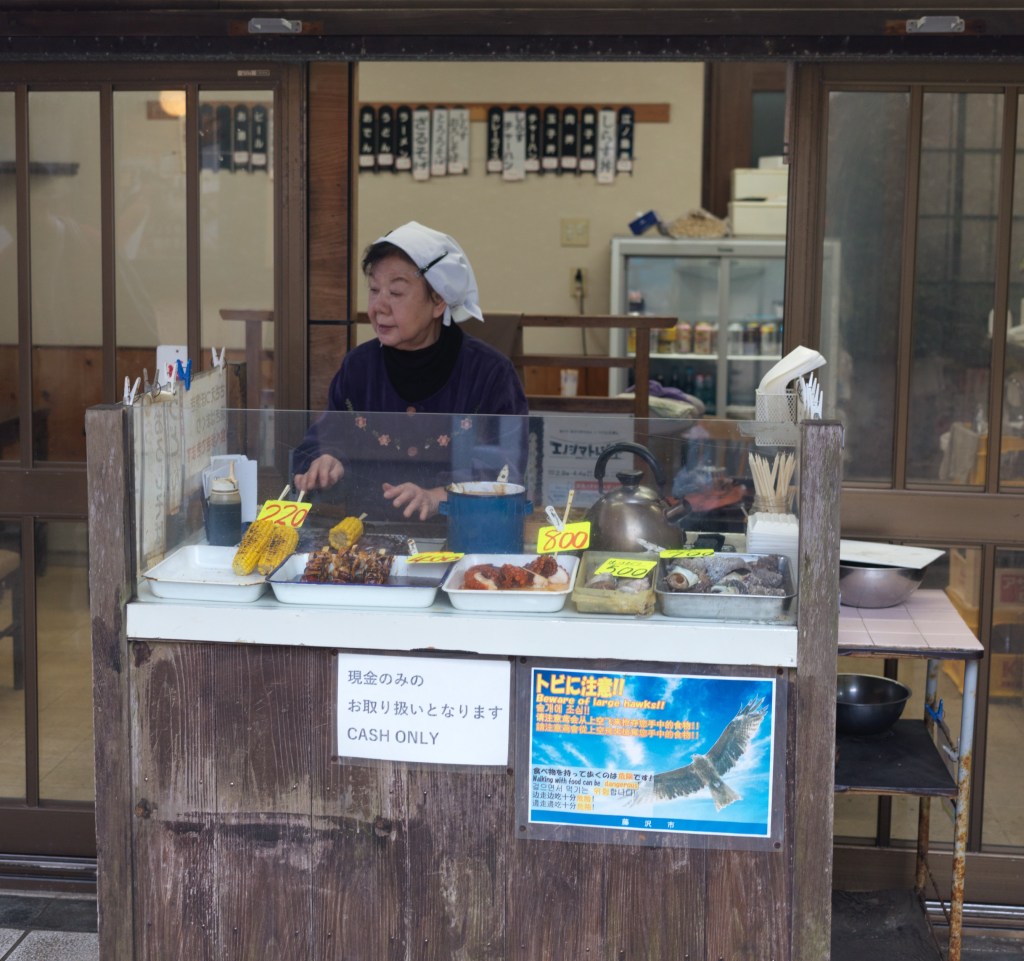
         While I walked across the bridge with a few fellow travelers, once on the island, the crowds were dense in the little street that headed straight into the trees that covered the hillside.  I pushed past the tourist shops and small food stands to make my way through the torii gates on onto a flat, level spot where stairs climb to the right and left.  The rain is constant now, and my little umbrella forces me to walk more deliberately to keep most of the rain off my body.  See, I’m a tall guy, 6’3” on a good day, of a size that creates problems for the tiny umbrella that I hold in my right hand.  As I turn to the left and begin walking up the stairs, I already have ten miles on my feet and am now wondering about my choices for this day.

Mt. Fuji is right over there! Trust me!

         My days in Tokyo have been wonderful in their way and I’ve had to push aside some of my more grandiose plans to do street photography in the city.  The rain, wind, and cold have kept me cowering under an umbrella, and trying to capture scenes while avoiding rain has been a chore.  Still, I persevered and decided to head to Kamakura and Enoshima as a way of shouting at the sky, “I’m walking through any maelstrom you throw at me!”

         So, I take steps up the north side of the island and quickly see that these steep steps will be my companion for a while as I make my way to the top.  I pass an escalator (WHAT?!) that propels tourists in three sections of fast-moving stairs.  I stop and think about the idea…should I take an easy path?  Nah, I say confidently, not realizing my mistake until far too late in the walk/hike/struggle.

Overlooking the marina

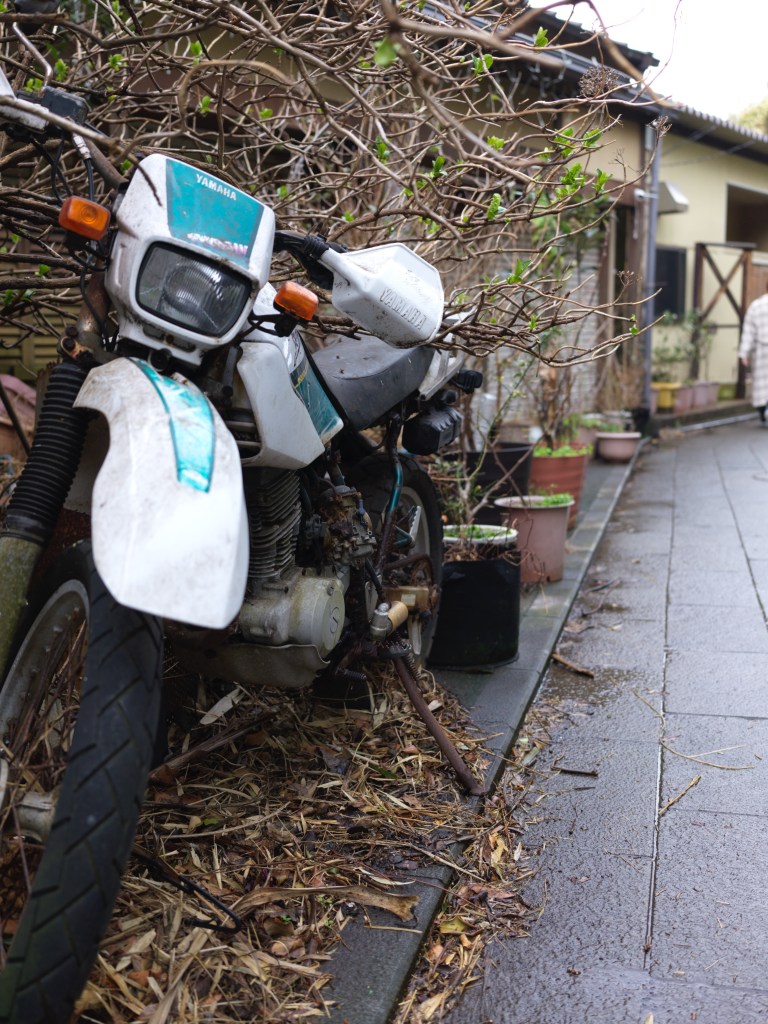
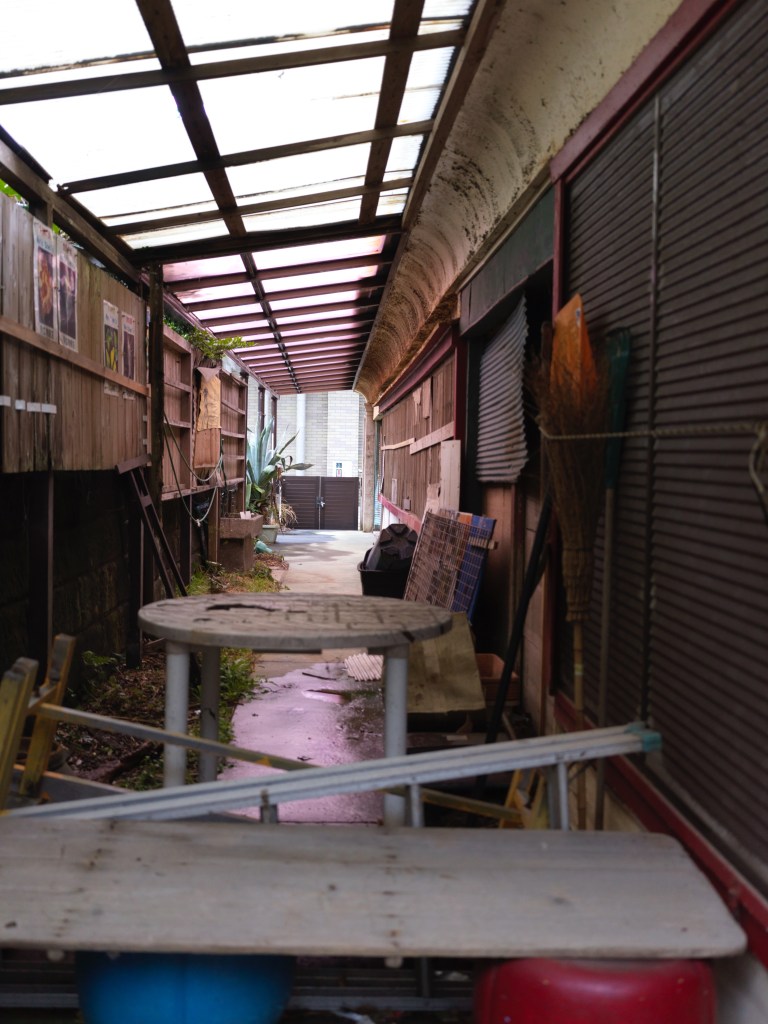
         As I make my way, a fence on my left has locks hung in places.  These kinds of tokens make me wonder at the meaning, thinking back on stories about locks on bridges like in Paris over the Siene. I’ve never been to Paris. Never seen the locks or the bridges. Here, locks are linked to a metal fence overlooking a marina. Right now, however, these views are covered in clouds, and I begrudgingly continue up. The thing is, I live at more than 5,000 feet elevation in the U.S., and walking at sea level has given me a bit more energy as I climb. Still, the stairs are steep in places, and I’m walking through the rain sometimes wondering if I’ll slip and fall.  The stairs wind up and up and up.  I’m reminded of Fushimi Inari and the walk through the forest up the mountain.  This hike, while similar in some ways, is not the same.  This climb leads up toward a shrine and caves, and nothing quite as spectacular as the red torii scattered along a hillside.  On this path at Enoshima are small souvenir shops, restaurants, and vending machines.  If you look carefully, you’ll find abandoned food stalls, motorcycles covered in vines, and the remains of shop signs. 


As I walk, my enthusiasm wanes and the rain is a melancholy companion on this journey.  I lost track of time and the cloud cover slowly inched closer as I climbed higher.  The weight of the clouds or the constancy of the rain finally pushed me to frustration, and I wondered if any of what I was doing at that moment was worth it.  As my mileage ticked closer to 12, I entertained turning around and heading back down the mountain.  At the time, I THOUGHT that the path would slowly wind its way back to the beginning in a loop and so I kept plodding forward. 

         On and on I went, stopping occasionally for a brief view or to get another green tea out of the ubiquitous vending machines.  As I came to the caves perched near the top of the island, they were closed and so I continued as the stairs finally descended toward the south side of the island.  The stairs got steeper and steeper, heading down until I turned a corner, and I met their end in rocks just at the edge of the water.  I looked at people taking pictures in the gloom of the day and searched around for a path to the other side of the mountain.  It did not exist.  I turned around.  I looked up at the stairs I had just come down.  WTF.

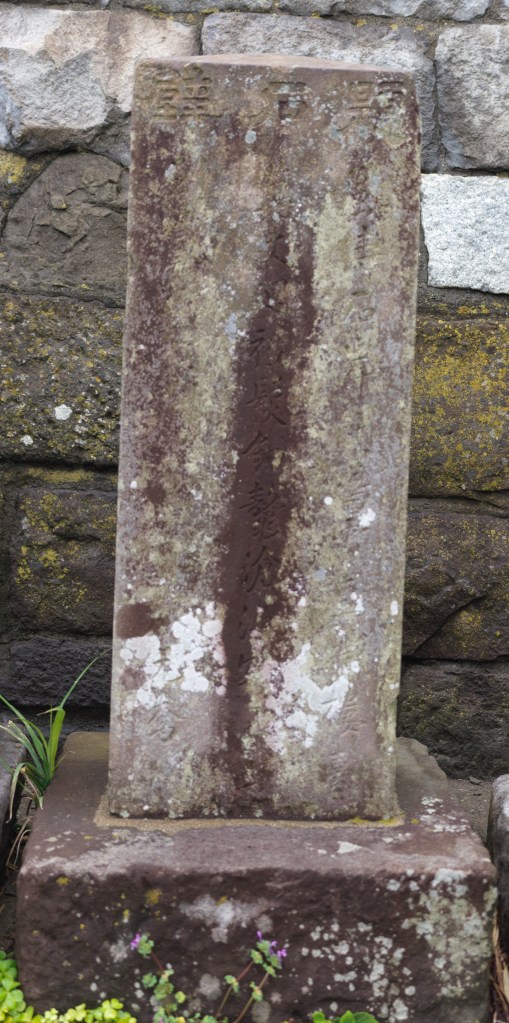
         As I glanced around me, I saw five stone markers…a sign placed in front of them told a brief story.  One of these stones was inscribed with a haiku by Matsuo Basho who had visited here 500 years before.  Wow.  Here he was again just like he was at Ueno Park a day before.  The carving was obscured by moss and lichen.  I stayed for a minute and the rain fell.  It was a moment.  Wet, and sweaty under my jacket, I stared at the stone, squinting my eyes to try and make out the characters carved into the granite.  I couldn’t see a thing.  This moment in time, like this day, was obscured, its meaning lost, and the effort expended seemed pointless.  All of it felt pointless.

Without a doubt / flowerlike sea spray is / the spring of the bay (Matsuo Basho)

         I turned and sighed, slowly forcing my tired legs to climb the stairs again.  Up I went.  An elderly woman walked past me, smiled, and continued. I pushed my weary body forward and soon caught up and passed her.  She smiled again and I made it to the top feeling defeated.  I stopped to check out the Enoshima “Candle” a tower on top of the mountain that, in clear weather, would give you quite a view of Mt. Fuji.  Not today, of course.  I grabbed another green tea, and just wandered around, a bit.  I felt lost internally and externally.  Where was I going, literally, and where was I going, metaphysically?  I concluded: F-ing nowhere.

         I tried to make the best of it all and started the long walk back to the bridge.  I picked my way downstairs as rain spilled from step to step.  I didn’t need to worry.  The steps were solid, and the surface had plenty of friction.  I returned to the locks on the fence and then to the flat concrete where I started my journey.  I walked through the still dense crowds of people and came to notice that I was the only non-Asian person in the mass of folks.  I noticed this situation earlier when I was seeing the people on rocks at the edge of the ocean on the north side, and now I was struck by how outlandish I must look.  A giant of a human walking through groups of people speaking Korean, Japanese, Vietnamese, Mandarin, and a couple of languages I couldn’t make out.  I suddenly felt so alone.  

Walking back through Enoshima markets headed to the monorail and, eventually, Asakusa

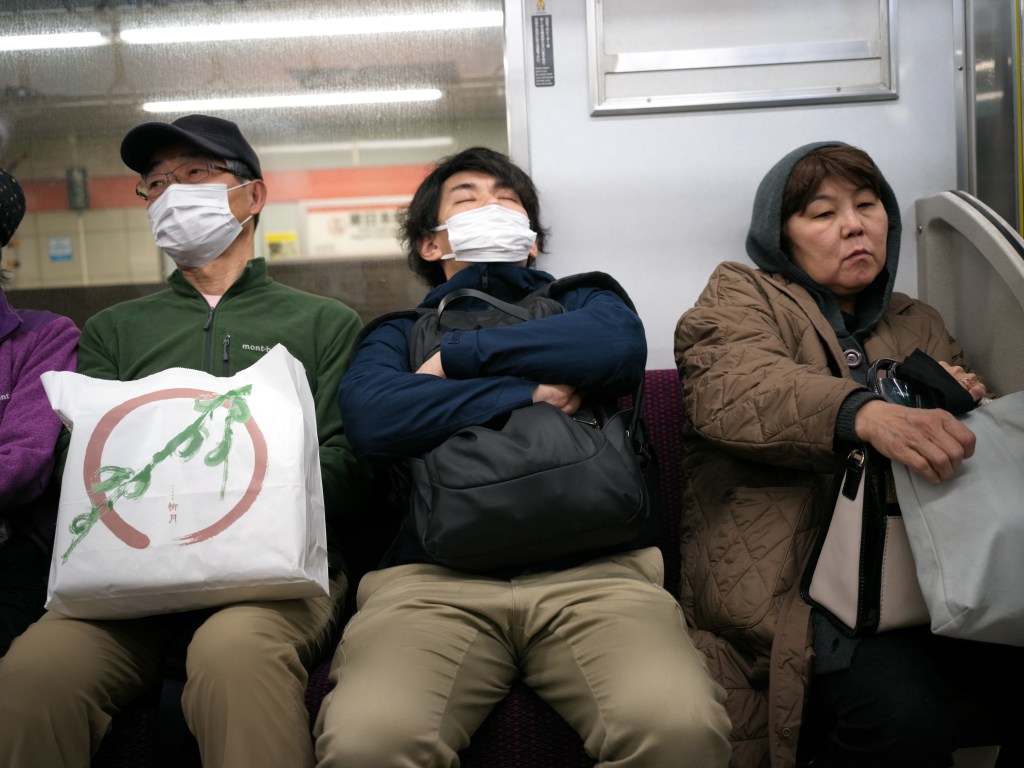
Here I was in this crush of humanity feeling desperately isolated.  I stopped on the way down, interrupting the crowd, and took a few quick photos of the scene.  I could tangibly feel the loneliness of being one out of many.  It’s a fascinating feeling.  I noticed this circumstance back in Asakusa that same day.  On the monorail from Enoshima to the main JR train line to Shinagawa, I was the only white person in the car.  I noticed the gentle stares.  As I made it into the chaos of Shinagawa and all the construction, the white folks I saw there had luggage boarding a train to Narita and to their homes.

Basho, covered in lichen and moss

         On the train to Asakusa on the Ginza line, again I was among Japanese folks coming home from work or elsewhere.  My thoughts collided as I tried to make sense of the day in Enoshima.  What had I experienced?  What had happened?  I was lost in thought when the train pulled into Asakusa station, a station a bit more derelict than others in Tokyo.  I had become very familiar with the place and chose my exit strategically to get me close to food.  It was about 8:30 PM.  When I exited the station fierce wind hit me and I made my way across the bridge over the Sumida into Taito City and toward a small pub below the Asahi building.  The black glass and golden steam represented on the top were comforting as I plopped my body down onto a seat at the bar.  I ordered octopus in a basil sauce, and a new dark beer, and just pondered it all. Enoshima.  Stairs.  Rain.  Basho.  My journey, today at least, was done.

Same…