
The Power of Empathy

As a high school teacher, empathy is at the center of my engagement with students. Understanding their particular struggles, and co-creating a process for getting through or overcoming specific problems has been my life for more than 20 years.

In the United States, empathy and the practice of empathy have come under attack by many people. An attempt to frame empathy as some kind of weakness represents a fundamental shift in the way we see the world. Claims that empathy is the “fundamental weakness of Western civilization” draw clicks across Social Media, and the reality is that empathy is a core strength of human interactions.

To address this topic, I’m drawing on my years as a teacher, Outdoor Program staff member, coach, and administrator. To open this conversation, I’d have you imagine your child struggling in a class, feeling overwhelmed and behind in work. Without empathy, I, as their teacher, would say something like, “Yea, it’s tough to complete assignments, and that’s your job.” In this scenario, I don’t offer help or support because I don’t see (or want to see) the struggles of another person. Instead of reaching out and supporting this student in the learning process, I ignore and deflect, turning the problem back on the student.

In a classroom or on a school outdoor trip, empathy is essential in educating students. Our role as teachers is to see the student’s need and then address that need with tools and resources we have available for the student. To TEACH requires knowing where a person IS; what they know, and how I can help. It requires empathy – a knowing of the student’s situation.

Empathy extends far beyond a classroom and teaching. With friends, understanding their situation and offering support is the goal of human interaction. When people ask questions like, “What is the meaning of life?” it’s an easy response: to be here to lessen the suffering and struggles of all of us. Empathy serves as the juice that activates these relationships and helps guide us into postive support and outcomes.

Pundits argue that culture has moved too far toward what they term “toxic empathy” or “parasitize empathy.” https://theconversation.com/magas-war-on-empathy-might-not-be-original-but-it-is-dangerous-255300 The idea that empathy is some kind of parasite frames the conversaiton in such a way that any kind of empathy is a drain on social development. Seeing the world from a another person’s perspective, it’s argued, leads us to somekind of “woke” mindset.

Ironically, those same pundits want us to see their side of things, relying on the very empathy that they decry. Without empathy in human society, no one’s thoughts or ideas are valued, as their positionality in society is not deserving of recognition. The goal for anti-empathy advocates is a society strictly divided.

At the same time, the anti-empathy cohort actively seeks out empathy when things in their lives go wrong. Loss of income has led some of these folks to ask for support from the larger community, literally relying on empathy to fuel their financial lives.

This conversation about empathy and its role in human relations is eloquently discussed by former Pope Francis as an engagement with the world and with the lives of every individual. Empathy, mercy, and justice work together as a means of recognizing and dealing with the plight of all people. https://www.vatican.va/content/francesco/en/letters/2025/documents/20250210-lettera-vescovi-usa.html. Pope Francis argued for an expansive and open sense of empathy (and mercy). As he said, “The human person is a subject with dignity who, through the constitutive relationship with all, especially with the poorest, can gradually mature in his identity and vocation. The true ordo amoris that must be promoted is that which we discover by meditating constantly on the parable of the “Good Samaritan” (cf. Lk 10:25-37), that is, by meditating on the love that builds a fraternity open to all, without exception.” This openness and willingness to meet people where they are and to address the needs of those people is a core principle that we need to embrace.

I argue that empathy makes us truly human as we see within each of us the possibility of joy, happiness, and compassion.
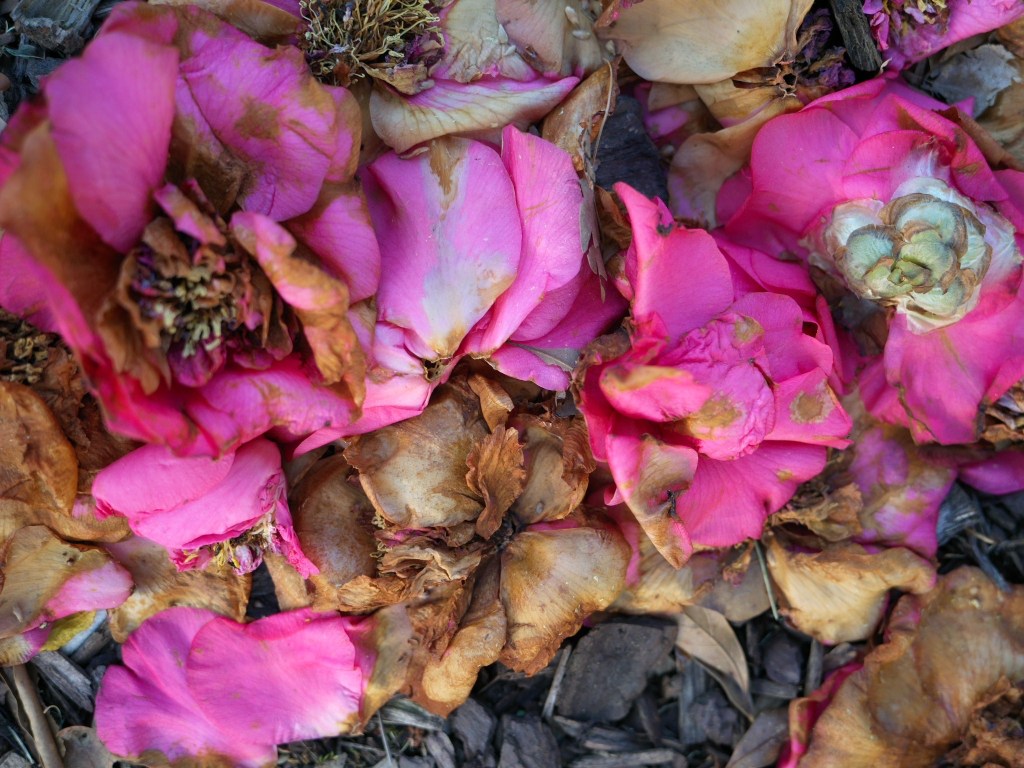

Sometimes, it’s all about perspective

The dining room is cold in the half light of morning, as I sit with yogurt and coffee within my reach. The hum of the heat and gentle breeze of warmth cradles the space, as I settle into reflection on this cool, March morning in Georgia.

It’s been about a month since my father’s death, and the clarity that comes from the experiences of that process are still shaping my understanding of the world. I’m brought closer to conviction on a few things in my life that have been neglected or ignored. First and foremost, my Vajrayana practice was always present and in the background of my daily life. Now it’s central to my exsistence. Second, the recognition of my own unwinding or transformation during the throws of the dying process have finally taken some shape and color. I can take action in ways that I haven’t done in the past few years. Those actions are small things: choosing to find moments of clarity, expressing my ideas and art, writing extensively on experiences, and coming to grips with how to untangle this fragile ego and mind.

Flowers, Athens Georgia

That process of untangling sent me into the past, reimaging old wounds and injuries as well as coming to an understanding of my negative thoughts and actions. It was important for me to take an accounting of my life in some very specific ways: how I hurt people I loved and how to rectify those actions. Using Tonglen as my meditative approach, I welcomes the negative thoughts and emotions, and in turn released love and compassion to those I harmed. I tried to recognize each and every mistep in my life and accept responsibility for all actions and thoughts. In this particular way, I was letting the past stay in the past and offered compassion in the present. I came to understand that I cannot correct previous actions; I can only offer love to those people who are no longer in my life.

It’s this act of letting go and elaborately allowing the regret and sadness to swell and then to release. With that release came compassion and love. Yes, it’s a mental process. No, it’s not letting me off the hook, so to speak. It’s my way of placing into the universe the kind of kindness that needs to be free from personal control and open as a genuine gift. I’ve come to believe that giving this kind of open-ended kindness, compassion, and love into the world is the one thing I can do to help. That means that I believe my mental formations, my thoughts, and imapct the world simply by their formation in my mind. As the Buddha said, “with our thoughts we make the world” or something like that idea.

Too, I’ve found that personal freedom (really I’m talking about mental freedom) comes at a cost. To be free from ourselves and our negative actions, we have to recognize the cost of such actions. The gentle unwrapping or untangling of our thoughts and emotions requires attention to what happened and how we can be free from those same negative thoughts, emotions, and actions. The cost, to ourselves, were the actions we took that resulted in pain in other people. That’s why personal freedom comes at a cost. Then, offering unconditional love and compassion to those we harmed is the gift that begins the untangling of our thoughts and emotions into something more complete and more forgiving.

In the dim light of evening

I also liked the metaphor of the lock and key. We have always had the key to our own freedom, we just have never figured out how to use the key on the locks we created. Again, I’m talking about the mental locks and keys here. Many of us are quite literally in chains with no access to the physical keys to unbind us. Once we can realise that internally we can find a way to open ourselves, the path to personal freedom is the gift we can give ourselves. In a sense, we build our own prison cells without realizing we have the means of escape at out fingertips (an old image, and a good one to fit my conversation).

While my process of untangling became years ago, my father’s death and dying allowed me to take more direct action toward untangling. I thought back to the story of Alexander and the mythical confrontation with the riddle of the Gordian knot. In the story, Alexander cleved the knot in two, supposedly solving the riddle. Alexander, it would seem, never understood that untangling the knot was not the point. The knot never mattered to his life. The untangling had to happen in his mind, not on the battlefield and certainly not by cutting a knot in two pieces. Cutting the physical knot simply brought him closer to his demise. Untangling his mind, it seems, was not something he every considered.

And so I seek a new perspective, one that it just on the edge of realization. The ways in which my father’s death has helped me along is a big leap in the right direction. My father showed me the way to untangle my knots….now, it’s time for me to get to work.

May you be happy, may you be well.