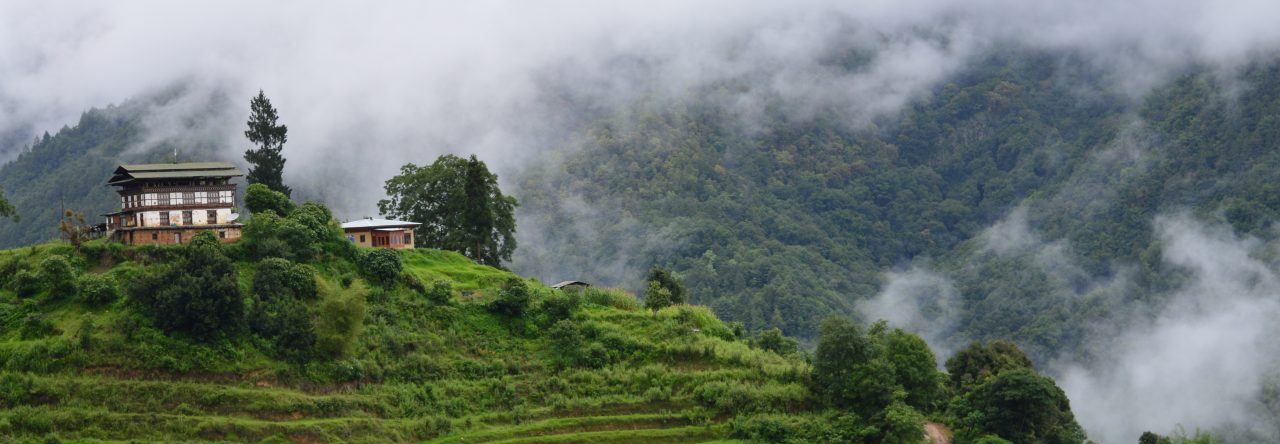
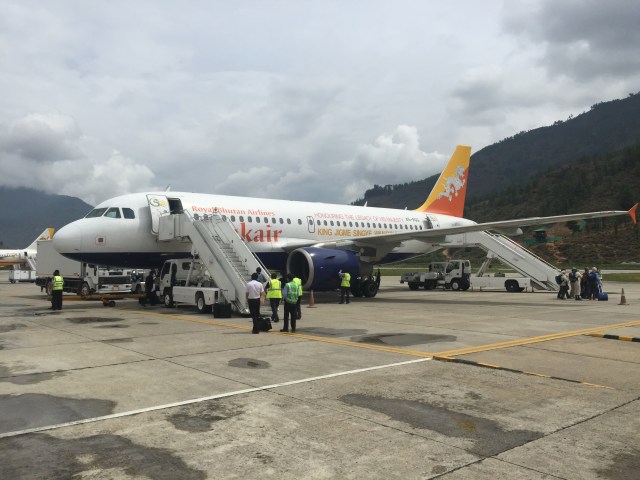
The moment I realized I was insane came when I got off the Druk Air flight in Paro. The air was filled with a moist, earthy smell, and as I stepped off the stairs attached loosely to the side of the plane, tears dripped down my cheeks as the moment overwhelmed me.
The reality of Bhutan reshaped my understanding of the world. Everything I thought before this day fell away into clouds of misunderstanding and hopeless analogies. Just breathing the air of the place reframed my thoughts in such a way that my mind was forced open into awareness. I walked, or, rather, floated toward the customs check-in, drawn toward an inevitable clash between accepted norms that, suddenly, didn’t make any sense at all. Enraptured, I had no ground to stand on, even as my feet stood on a polished earth.
I exited the building after gathering my bag and was greeted warmly by my future friend and mentor. I learned quickly that friendship could extend across lifetimes and that physical space had no relevance when it came to people, we are deeply connected to over time.
During those first few days, my face hurt from smiling so much. I was enmeshed in a kind of joy that comes from meeting people and sharing stories. It wasn’t from just the here and now; it was from the skin soaked in the glow of presence. Here. Now. Every new greeting, every kind word, flaying open my critical mind, exposing the dark drama of days to an all-encompassing light. The rich earth, now open to a truer sun, burst with life. A sense of wholeness captured me, and I never wanted to let it go.
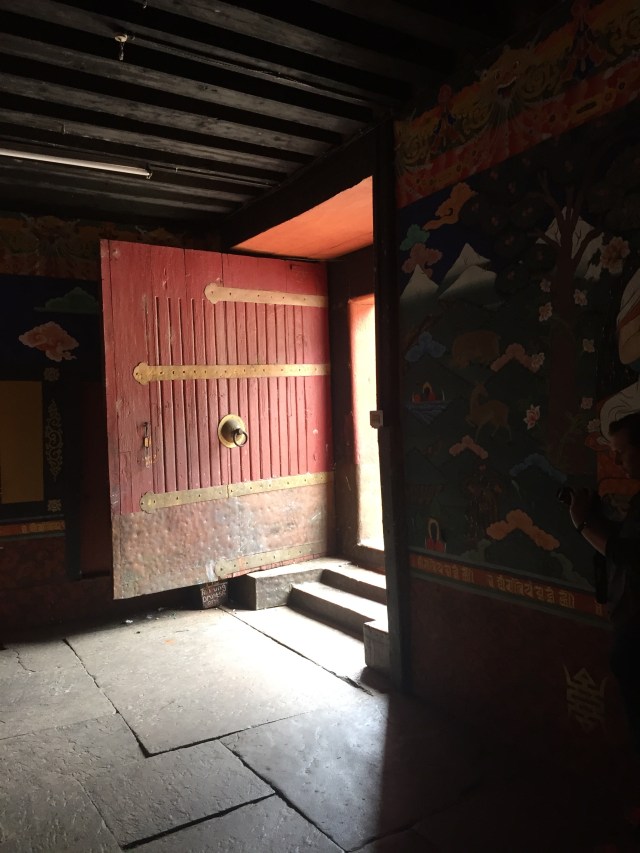
The van ride to Thimphu was a blur as my exhaustion started to build from the gentle rocking of the ride on curvy roads. We settled into the trip when, suddenly, the king’s caravan slowed as we passed. He waved, smiling at our group, and a kind of euphoria took hold of the group. Laughter and excitement pealed through the van. I couldn’t wash the smile off my face.
A sense of wonder rose in my mind, and the experience of the kilometers remains etched on my psyche. The feelings, the sensations all coursed through me, and, finally, I can recapture that remarkable mood, years distant.
My return to Bhutan after six years’ absence leaves me breathless, at times, with what I will encounter. My previous travels to the country embodied every possible positive experience of a people and a place.
The anticipation of introducing this country and its people to students, the possibility of connecting to the feeling and sensation of awareness, and the chance that it all goes awry. All of it courses through my body, and I wait for what is to come.
Of course, that’s how it all works, isn’t it? Sitting. Waiting.
Whatever happens in March, I will soon know what it feels like to return to the first place where I felt completely connected to the world.
 Reflections on the Path