No Fear of Death / The Ultimate Fear of Death

On the top of Cloud Peak in the Cloud Peak Wilderness Area of the Bighorn Mountains in Wyoming, I faced my first sense of death.  The wind was whipping across the tops of the mountains, and the gusts were so strong that I was trying to stay upright on this rocky, flat summit.  At about 20 feet by about 10 feet wide, the summit of Cloud Peak is a relatively easy place to stand.  On this day in mid-July, however, gale-force winds shot over this peak. 

My friend John and I woke early in late July 1981.  We camped near Lost Twin Lakes and retraced our steps toward the Peak, past Misty Moon Lake and the long approach to the mountain.  The hike was brutal and, in many ways, added to my anxiety as I stood on top of this mountain.

As gusts blew, we scrambled, bouldered, and climbed to the summit of Cloud Peak.  The day was bright, sunny, and terrible with these constant wind gusts.  I was dressed poorly, not accounting for the cold temperatures that buffeted my skin every time a gust blew past.  The constant sweat on my body did a very good job of cooling my skin; so good, in fact, that as I scrambled to the summit and was in a kind of wind shadow, I was shaking.  If you’re ever interested in climbing this peak, be aware of the lack of a clear trail, the constant up and down as you get close to the mountain, and the sometimes-difficult path to the peak.  Too, this hike is exposed in such a way that you feel desolation all around you.  The gray stone is interminable, and you feel like you’ll never find the summit.

Cloud Peak from Lake Helen

Yet, here we were, on top of the peak.  I pulled out my Nikon FM with color film and planned to take a series of shots from the top.  As soon as I raised the camera to my head, a gust pitched me sideways, and the camera slipped from my hands. Reacting quickly, I reached for the strap, grabbed it in my hand, and was completely off-balance as I fell toward the cliff to my left.  I contorted my body just enough so that as I fell, I hoped not to drop off the cliff into the roughly 1000-foot expanse.  My shoulder hit hard, and I landed on my back, head cracking the rock, about 6 inches from the edge of the summit.  John, in the meantime, had reached for my legs, and his hand was wrapped around my ankle as he too, fell onto the hard granite surface. We stopped moving, and I could sense as much as see out of the corner of my eye the terrible maw of the valley below.

Cloud Peak Approach

I was in a kind of shock.  Exhausted, cold, shaking, I couldn’t move for a few minutes.  Somehow, my camera was in my right hand, safe from any harm.  My left shoulder screamed in pain, and my hip was hurting.  In the moments just as I fell, I had a powerful sense of death, that I was going to die, falling over the edge of the cliff and into the open space below.  Fear gripped me, and I was stuck.  John slowly stood and asked and then commanded me to sit up.  He grabbed my camera, put it on my daypack, and then pulled me up to sit.  I was no more than a foot from the edge, and I still couldn’t stand.  Adrenaline coursed through my body, and rather than being able to move quickly, I was immobilized.  After a few minutes, I got on my hands and knees and crawled a few feet before I could stand.

Putting hands on the stone and knees firmly planted on that same rock in an awkward cat/cow pose, I stood slowly, John holding my left arm as I came to my feet.  I was unsteady.  John and I looked to the West, and what was formerly a sunny day revealed a dark bank of clouds quickly forming overhead.  How had the weather changed so quickly?

As one, we desperately gathered our packs, no time to talk, and headed down the summit along the rocky, loose surface we had just come up.  In less than 30 minutes, a very light rain started, and the formerly dry stone became a kind of insane play of water on rock, as each step was a lesson in staying balanced and upright.  My hand slid as I placed it on a flat surface, and my boots, formerly my most cherished piece of gear, became small sleds as rain and rock made for a slick, almost ice-like surface.

We half walked, half tumbled down the side of the mountain, searching for the cairns that were so prominent earlier, now impossible to find.  Was this the right way down?  At some point, we simply gave up trying to find the markers and used our eyesight and general understanding of topography to navigate the trail/scramble.

In my mind, this tragicomedy of a hike took hours and hours; in truth, we moved so quickly that we made it to flat land in about three hours, finally locating the Misty Moon Lake trail as light rain fell and the sunlight faded.  We arrived at Lost Twin Lakes in the dark of night, the cold now a serious concern with us in shorts and t-shirts, rain jackets, and some snacks.  Luckily, our flashlights were bright enough to light our way, and we found my tent: the poorly named “One Night Stand.”

We jumped into the tent, shoes off under a small vestibule.  We drank water we had gathered earlier and quickly ate some GORP stored in my Nalgene.  Climbing quickly into our bags, I was happy for this ridiculous 10-degree bag…the only one I had for backpacking.  I warmed up quickly and was asleep in minutes.

While I have faced real threats to life in the backcountry at a couple of other moments (lighting strikes; crossing a ridiculously high stream in Montana, nearly falling on my ass), never have I ever faced something like the Cloud Peak Hike.  For days after, John and I talked about our experience and my near death.  At some point on another hike in Yellowstone, something snapped, and John cried hard about the terror of possibly having to recover my dead body and his own fear of being the one person who was last to see me alive.  My reaction was, at first, openly muted, but internally, many things had changed. After we made it out of the Bighorns, I tossed my boots and bought another, more flexible pair.  Then, I purchased some safety equipment: a better flashlight, more batteries, more First Aid for my kit, some socks, wool fingerless gloves, and a knit hat.  I wanted to be more prepared for what could happen in the backcountry.

As far as the idea of death went, it was lodged in my mind.  It captivated my attention, and I read as many near-death hiking experiences as I could.  These stories followed a similar pattern: bad choices led to near death.  Hmmm.  Eliminate bad choices and NO DEATH!  Yes.

Soon, however, I realized that things were not so simple.
Things My Father Taught Me About Death and Dying

I cannot say that my father and I were close. We shared experiences and worked together on projects. Our conversations were stilted, short, and clipped moments of verbal interaction. We never shared deep conversations about life and how to life it, and when I faced struggles, my father did not have a lot to say.

That relationship entirely changed in the last two weeks of his life. I became his caregiver as he communicated his needs to me, and I did what I could to make his transition easier. Our communication together started as those conversations always had: short, direct statements. As the process continued, I stayed present, and the communication with him shifted from verbal to non-verbal, from rational to emotional. He expressed his feelings and intentions directly to me through a kind of direct communication through a look, expression, and an occasional word. While those around me could not understand even his most basic phrases, I understood him as clearly as I am writing this reflection. It was a strange feeling to hear someone who was non-verbal. That shift happened in the final days, and I learned more about communication in those moments than I have ever experienced in my entire life.

The lessons I learned were clear and specific. They mirror the teachings from Padmasambhava from the Tibetan Book of the Dead, and I experienced them directly from my father.

  1. Stay Present. Throughout the process, my father wanted no distractions. No TV, No Music. Just me or my mother in the room with him.
  2. Communicate Your Needs Clearly. My father’s requests were specific and simple. Water, a little bit of liquid food, and morphine for pain. That was it.
  3. As the Body Changes, Accept Them. My father did not fight his body and when he couldn’t sit up any longer, he let his body tell him what he needed.
  4. Say Goodbye. A few days before his death, my father said his goodbyes. His children and grandchildren gathered around him for those final words.
  5. Letting Go Requires Space. To leave this plane of existence, my father needed me and my mother to be out of the room. He passed only after we left.

I don’t pretend to understand all of the teachings from the Bardo Thodol, and my small insights helped me through the last moments of my Dad’s life. As I sat with him, I recited the chants and prayers I was taught in retreats and classes through Rigpa, and from Dzongar Khyentse Rinpoche. I chanted the Benza Guru mantra, the parts of the Bardo Thodol I had been taught, and used my prayer beads as a means of keeping my mind focused and present with my father. While I wasn’t in any way trying to convert and change my father’s path, these practices helped me through the process and taught me how I will hopefully approach my own death.

As I integrate these moments into my life, I am so grateful for the chance to be with my father along this journey. I came to understand as completely as I have ever had the meaning of life. It was profound, hopeful, and compassionate. I can only wish a simlar experience for everyone open to being present in the moments of death and dying.

May you be happy, may you be well.

The Echoes of Death: In the Arms of Dorje Drolo

The sound resonates through the wood, and my heart races as I half stumble, half run away from the noise.  The reverberation of that sound shakes the ground, and I am terrified.   I can hear the deep, mournful breathing behind me at a distance; this creature must be huge.  I recognize the sound suddenly as giant footfalls shaking the earth beneath me.  I quicken my pace, struggling with my damaged body and clumsy footwork.  Around me, people are fleeing this being as well, some tripping and falling, others shoving people out of their path as they hasten into the open field in front of us.

            I’m suddenly terrified, shaking in fear even as I take running steps onto the grassy plane in front of me.  I know I’ll be caught as I can feel rather than hear the rapidly approaching beast behind me.  I’m losing this race.  I hear screams behind me, and I try to make my mind work: flee or turn and take my chances? A crash sounds in the distance, and through the trees emerges a deep red creature ringed in flames now roaring at the people running from its arms outstretched to crush any that it might grab.

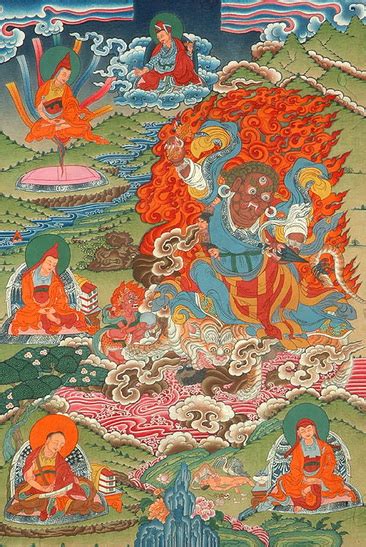
            In a moment, I turn and face the creature.  A crown of skulls line its forehead, and the red body and face exude a kind of violence.  Huge eyes and nose dominate the face, and, suddenly, a grimace or twisted smile opens its mouth as rows of sharp talon-like white teeth emerge from the darkness of its mouth.  Flames surround the body, lapping the edges of the grass, causing a black soot to emerge from the feet and hands. Soon, a couple of people are swept into its embrace, crushing their bodies as blood shoots in all directions, further changing the color of the grass.  A dark ichor stains the green grass black, and I stay fixed in my position, watching in awe and terror at the sight.

            As other people are wrapped in his deathly embrace, the creature turns and looks straight at me, the only one who stopped in the mania of the crowd.  His eyes pierce my mind, and I am almost brought to my knees, struggling to stay upright, fighting the fear that has now taken hold of me.  Blood flies again, this time splattering me on my face and hands.  I look down to notice my hands covered in blood.  Time slows, and I look up again, seeing now who this being is: Dorje Drolo, wrathful deity.  

            My mind reaches back into the recesses and archives of my memory, pulling forth the teachings on this being.  It is, in fact, a manifestation of my mind.  The horror of the feature and the blood on my hands are all physical manifestations of my mental formations.  And what can I do?  The death seems so real, the violence so tangible.  What can I do?

            Out of the corner of my eye, I see a wooden chest.  It’s huge and covered in metal straps on the top and bottom.  The lid is open, and I have a brief thought: force Dorje Drolo into the chest.  I run at the creature, catching it off guard, not expecting someone as small as me to attack its position.  A Phurba knife descends from his left hand headed directly toward my heart center.  I steel myself and step away from the knife as I come into contact with the being, pushing hard to my right.  Dorje Drolo stumbles and falls backward, its body hitting the opening of the chest.  Flames threaten to engulf me, and I push hard against its resistance, using my entire weight as I shove this red beast into the chest; its arms and legs kick and flail.  Instantly, I wake from this dream, shaken by the experience that was almost entirely in my head.  I’m sweating, breathing hard as my mind reorients into the present moment.  I feel drugged, not lucid, the remains of the dream hanging on like the arms and legs of Droje Drolo.  Staggering out of bed, I walk through the house, still feeling the horror of the experience. I cannot go back to bed and fall into a chair.  I’m dazed, confused, and in wonder.  What does it all mean?  I’m in a liminal place, neither in one world or another.

            Of course, this all makes sense.  I prayed over my father for weeks before he died, and I envisioned the best possible outcome for his transition from this life to the next.  My meditations on death and dying were informed by teachings from Sogyal Rinpoche and Dzongar Jamyang Khyentse Rinpoche.  While I was able to incorporate some mantra and meditation, I am no monk, and my feeble attempts at helping my Dad may or may not come to fruition.  What I do know is I am dreaming in such a way that these meditations are coming through me in vivid color and dramatic experiences.  I wonder, each night before I sleep, what new story will enter my mind, what strange experience I will face in the dreamworld I create?

On Death: Day Six

It Comes All At Once

Days started to blend in my mind as my Mom and I planned each aspect of my Dad’s service.  While my father had explicitly and directly said, “NO SERVICE” my mother, who everyone calls Miss Gail, overruled her dying husband and proceeded with arrangements.

Pastor Bob came into the house offering condolences.  His measured manner and calm demeanor were a welcome distraction for my mother, and a way for me to focus on the technical details of my father’s final trip.  As I mentioned earlier, my father’s former boss offered to transport his remains for no cost.  This one gift was the difference in making the final days a bit less terrible for my mother and, by extension, giving me a bit more space for the moments leading up to my father’s death.

I wondered how much or how detailed I wanted to make my writing about the process of dying, and I came to the conclusion that I wanted to be as thorough and detailed as is reasonably possible.  Before I describe the final day and moments, it’s necessary to have a little insight into my belief and perspective on death and dying. Without too much detail, I practice Vajrayana Nyingma Buddhism, which is the oldest of the Vajrayana sects of Buddhism.  The transmission of these ideas comes from Buddha Padmasambhava in the 8th century C.E. and has been passed down to the present through two teachers I follow and with whom I practice.  The first, Sogyal Rinpoche, introduced these practices to me over the past twenty-five years.  I was lucky enough to meet with him multiple times during his lifetime. After his death, I joined the community of Dzongsar Khyentse Rinpochewho is the incarnation of Dilgo Jamyang Khentsye.  Yes, it is a mouthful. The teachings I have been lucky enough to be given are all about death and dying.  I’ve been studying these practices for decades.  If you know nothing about ANY of this stuff, here’s the one thing to know: the Vajrayana practitioners have teachings on the process of dying in elaborate detail.  I have been taught and tested on these ideas.

During the last 36 hours of my dad’s passing, physical and mental changes happened in succession.  While 36 hours may sound fast, when you’re in it, time slows to a crawl.  Minutes stretched into hours, and I could hear the smallest sound.  My Dad could not stand to hear any noise in those hours, and we kept the room silent (or as silent as we could with a very chatty mother and sister intending to clean every inch of the house while I sat in the room with Dad).  Many people suggested music, and every time I attempted something like that, he said no.

In these final moments, I used liquid morphine Hospice prescribed for the struggle.  They warned me that he would experience, at times, intense bouts of pain.  He did.  Between 36 and 24 hours, he asked for just two things: water and morphine.  He remained aware and cognizant until the final hours of his passing.  Simply put, he knew what was happening.

Because he lost his ability to swallow without liquid falling into his airway, I squeezed drops of liquid into his cheek as he lay with his head on the pillow.  He would ask for more… meaning water… with a small syringe, I dripped it into his cheek. He was able to get some relief with this method.  He slept often, eyes completely open, mouth agape.  Around 24 hours before, his chest rattled with fluid.  Twice during the final couple of days, a hospice nurse came to check on his vitals…in the last visit, about 36 hours before his death, they could not register blood pressure and did feel a strong radial and carotid pulse.  My father had withered into a shell of himself, his BMI now around 10%.  He looked like a skeleton.  The image was stark.  Skin stretched over bone.  His hips were boney protrusions, and we moved him constantly to prevent bed sores.  Even in this state, he was alive and kicking.

During the final day, I stayed with him much of the time, reading as I sat by his side.  His breathing changed during the course of the day, starting with about 14 respirations/minute (normal for most folks) to a more hurried, shallow breath.  The rattling in his chest stopped about 6 hours before he died, as he couldn’t take deep breaths.  His heart rate spiked to 200 bpm as I consistently checked his pulse over these hours.  

I talked to him quietly into the evening, ensuring him that we were all OK, and that he could let go whenever he wanted.  

Between 6:30 and 7:30pm, he was clearly in distress.  The Hospice nurse had explained that I could increase morphine dosage and frequency.  I did.  From once an hour to every 15 minutes I gave him a dose.  By 7:30pm, he refused water by expressing no to me.

As an aside, in the final few days of his life, I was the only one who could understand what he wanted.  For whatever reason, I could hear him when others could not.  At first, I was frustrated that my sisters and Mom couldn’t understand him.  Then, as I watched them try to hear him, they literally could not understand what was clear to me.  That was among the weirdest moments in this entire experience.

By 8:30pm, he was slipping away. He stopped responding to my touch.  In the previous hours, every time I put my hand on his hand or face, he would look directly at me.  Now, he was gone. His arms and legs shook, and his body went through a series of tremors… not violent in any way, just a gentle shake or two.  The timbre of the air in the room had changed and a palpable odor covered the space. 

At 10:00 pm, he started making a moaning sound that was air passing through his airway.  When you hear something like that, it’s clear that it’s not an emotional or intentional reaction.  It was air moving through his body.  

My mother came into the room and was completely unnerved by the sound. My sisters were upset and angry that I was letting him suffer.  Explanations didn’t help, and I gently asked them to go into the den, and I would explain his situation to them later.  They left soon after.

As I added more morphine into his cheek, it took about 30 minutes for the moaning to end.  His breaths made another change, and his pulse was erratic: one hard beat/stop/two soft beats/stop.  No real pattern.  Hospice call this breathing Cheyne-Stokes, named in the 19th century for the scientists that determined most people experience this breathing toward the end of life.  The rapid heart rate and shallow breathing go together.

After a while, around 1:00 AM, my mom came back into the room and lay in bed with him.  She asked if she could put her hand on his chest.  I told her, of course, and she felt his irregular heartbeat.  She asked me why it was so strange.  I talked about the dying process and said that it was completely normal.  She did not agree it was normal and, as is often the case, argued with me about what normal was.  I laughed inside, seeing that she still had that mom energy.

I headed to my room upstairs, as Dad’s breathing had stabilized into short, quick, shallow breaths.  Soon after, my mom called and said something had changed.

After changing clothes (it’s HOT here!), I went back to see him.  Mom had left the room to take some cough medicine (she’s got allergies and won’t take allergy medication…don’t ask), grab some water, and use the restroom.  She was in the kitchen.

“He’s not breathing.” Hmmm. I walked into the room and felt for a pulse; nothing.  His breathing had stopped, eyes and mouth still open as if he was taking a breath.  His hands were cold.  

The Hospice nurse had explained that in most cases, when a patient is aware of their situation, the patient cannot let go when people are in the room.  They want to remain in that place with their loved ones, even though they truly are not present.

My mother and I had left the room, and as soon as we did, my dad died.  Sure, maybe it was a coincidence.  I don’t know.  What I do know is the moment happened, at the end, all at once.

A phone call to Hospice and the Funeral Home happened soon after I checked my dad’s pulse.  Within twenty minutes, Dylan, our nurse, came in.  He was calm and kind.  My mother absolutely couldn’t be in the room with my dad at this point, and Dylan walked her into the den.  I called my sisters and told them what had happened.  They had left earlier in the evening, and I let them know the details.  My sister Whitney swooped in a while later and demanded to know why I was qualified to declare our dad dead.  Dylan came in and helped Whitney understand the circumstances.  One look at Dad, and she headed to be with Mom.

Dylan asked if I wanted to prepare my dad for his trip, and I agreed.  We turned him on his back, and we washed his body.  My sister and I had bathed him the day before, so things were clean.  I grabbed some clothes Mom wanted him to wear, and we dressed him.  I couldn’t help thinking about how I had similarly dressed my children when they were very young, pulling on pants or skirts as they fought with me the entire way.  My Dad, in his own way, resisted the clothing as we had to bend and stretch his tight legs and arms, his body beginning to stiffen.

The mortuary vehicle arrived, and Dylan and I placed my dad on a backboard, strapping him in place, checked by the mortuary staff.  My mother and sister wanted nothing to do with this process, and I helped guide my dad to the vehicle.  They placed him in the back on the gurney, covered in a thick cloth covering of tan with a black repeating pattern.

We all said our goodbyes.  My sister and I went into the empty bedroom and stripped the sheets.  By this time, it was 7:00AM.  About 4 hours had passed since my dad’s death.

My sister then went on a cleaning rampage.  She vacuumed, mopped floors, emptied the pantry, tossed canned goods that had been around for ten years.

I politely stepped away, finally lying in bed upstairs.  As soon as my head hit the pillow, the people next door started leaf blowers and lawn mowers. I lay there for a while, listening to the sound of machinery, just a few feet from my window.  I was pissed.  Then, I remembered my father, on Saturday mornings, dragging me out of bed to mow the grass, rake leaves, and do my work around the house.  I had to chuckle.  Thanks Dad, for one last laugh.