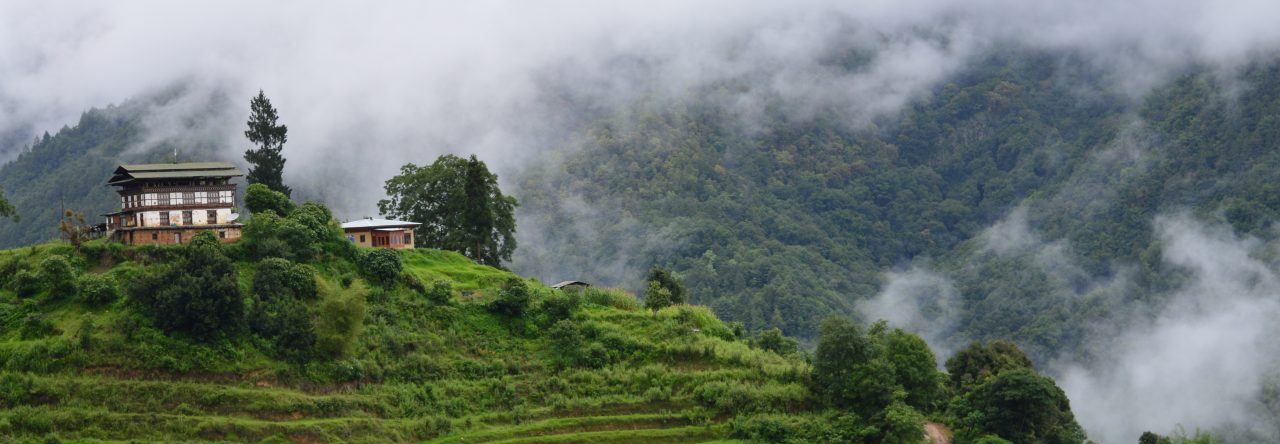
Life flickers in the flurries of a thousand snowflakes,
Fragile as they touch the warm solid ground.
Disappearing into the earth as the sky rains frozen
water,
again and again.
Thomas Gentry-Funk
Patrul Rinpoche (1808 – 1887) born in Tibet and trained in Vajrayana Tantric practice, wrote many books on a wide variety of Buddhist topics. Arguably, none is more precious or important than his commentary on the Tibetan Book of the Dead, The Words of My Perfect Teacher. I came to know about these texts through online courses taught through Rigpa.org. This organization trained teachers to communicate the ideas of Vajrayana Buddhism to a lay audience. My first introduction to these ideas came from a cassette I purchased at Borders Bookstore in Santa Fe, New Mexico. I was experiencing my own crisis of consciousness and was searching for grounding in an impossible situation. As I wandered the shelves, I purchased two things: Thich Nhat Hahn’s Breathe You Are Alive, and a cassette of Sogyal Rinpoche’s talk on spaciousness called Bringing the Mind Home. The talk by Sogyal Rinpoche propelled me into the world of Vajrayana Buddhism and sent me on a path that I continue today.
As I sat with my father in the final weeks of his life, I turned to the teachings on the Bardo Thodol and the passages I had memorized years before. My copy of The Tibetan Book of Living and Dying by Sogyal Rinpoche, and The Words of My Perfect Teacher informed my daily practice as I stayed in the moment with my Dad.
The dog-eared and torn pages of each book allowed me to return to important passages and ideas that kept me grounded as my father was dying. The truth is, I had no idea how I would experience this process going into it and I found that the texts I had read and the retreats I had experienced helped me maintain a calm mind as the moment of my father’s death approached.
Technically, I learned a lot about the dying process from these texts and recognized the signs and symptoms of my father’s transition. As I stayed near him for days on end, I felt a kind of joy of service and care: simply focused on what needed to be done to help him find his way. In the quiet moments of my experience, I found a kind of communion with my Dad in ways I never experienced. I bathed his fragile body, helped him to the bathroom when he could still walk, and gave him medication to soothe his pain.
In those moments of care, I reached a state of transcendence. Specifically, time slowed and I was no longer in what we might call the real world. I was in a place and time that I hadn’t expected to be a part of. I didn’t feel fear or anxiety; I felt absolute calm and resilience. In this place, I sensed rather than heard my father, understanding his needs while those around me were bewildered.
In my father, I noticed he, too, became more and more calm as the end came near. He was with me and communicated his intentions to me in the final hours of his life. While I’ve read stories of someone’s passing, my father was gone to us a few hours before he died. I waited with him, holding his hand and putting a warm cloth on his forehead as his breathing and heart rate changed dramatically. While I could feel his presence, he was more distant and detached as his body was ending its cycle of life. Circulation slowing, hands and feet cold to the touch, and irregular heartbeat in his chest and arteries, I felt as much as I saw these physical changes.
Patrul Rinpoche came to mind as I sat in awe of being present in these moments. His words rang as a sound and a feeling. “Everything that is born is bound to die.” We all pass from this state of being to another one, drawn inexplicitly and directly toward death. In the end, there was nothing to be done. No remedy to seek, no drug to stop the dying. It was inevitable. My father, as it turns out, was my perfect teacher.
I thought about the idea of impermanence after I witnessed the transition and came to understand the teachings on a new, deeper level. A friend had said to me that there is no greater teacher than death and dying. We learn more, he said, in those last hours than we do in our whole lives. He was exactly right. My practice has taken on a new understanding, one that I didn’t really have until I was present at my father’s death. As Patrul Rinpoche said, “To wake up in good health is an event which truly deserves to be considered miraculous…” (41)
I’m now here going through my experiences and recording these thoughts in journal and online forms. For me, poetry seems to capture these ideas better than prose, and I turned to Yoel Hoffman’s Japanese Death Poems written by monks and poets. This book has helped me grasp death in a poetic form that transcends my own limited understanding of its meaning and process. Shun’oku Soen wrote this piece on the day of his death (115),
Adrift between the earth and sky
I call to the east and change it to west.
I flourish my staff and return once again
To my source.
Katsu!
May you be happy, may you be well.

 Reflections on the Path